Hong Kong: A Photo Essay
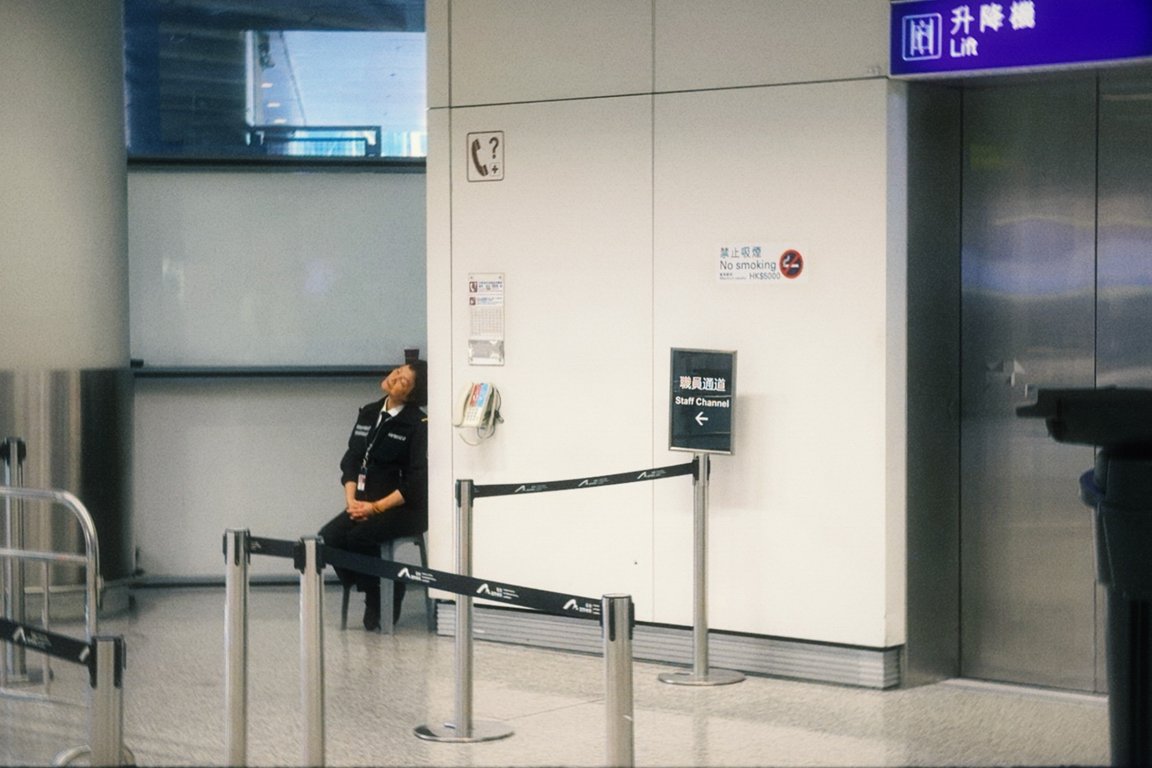
I went to Hong Kong in March 2026 for a few days with the intention of wandering the city, photographing the streets, and understanding more of the culture around me. Since I have a habit of watching movies on long-distance flights, I ended up choosing Punch-Drunk Love (out of deference to Paul Thomas Anderson, whom I consider one of the greatest directors alive). I do not want to overstate the coincidence, yet its fragile blend of anxiety, tenderness, and unease felt uncannily attuned to the experience of arriving alone in an unfamiliar city. The adventure started right at immigration, where an officer told me that my passport was failing a check and rejected my entry. For a moment, I felt a sharp drop of anxiety and confusion, unable to understand what was wrong or how to respond. My heart had almost sunk when, fortunately, another officer came over, looked at the problem, and realised that the first officer had made a mistake. She cleared it quickly, and I was through.
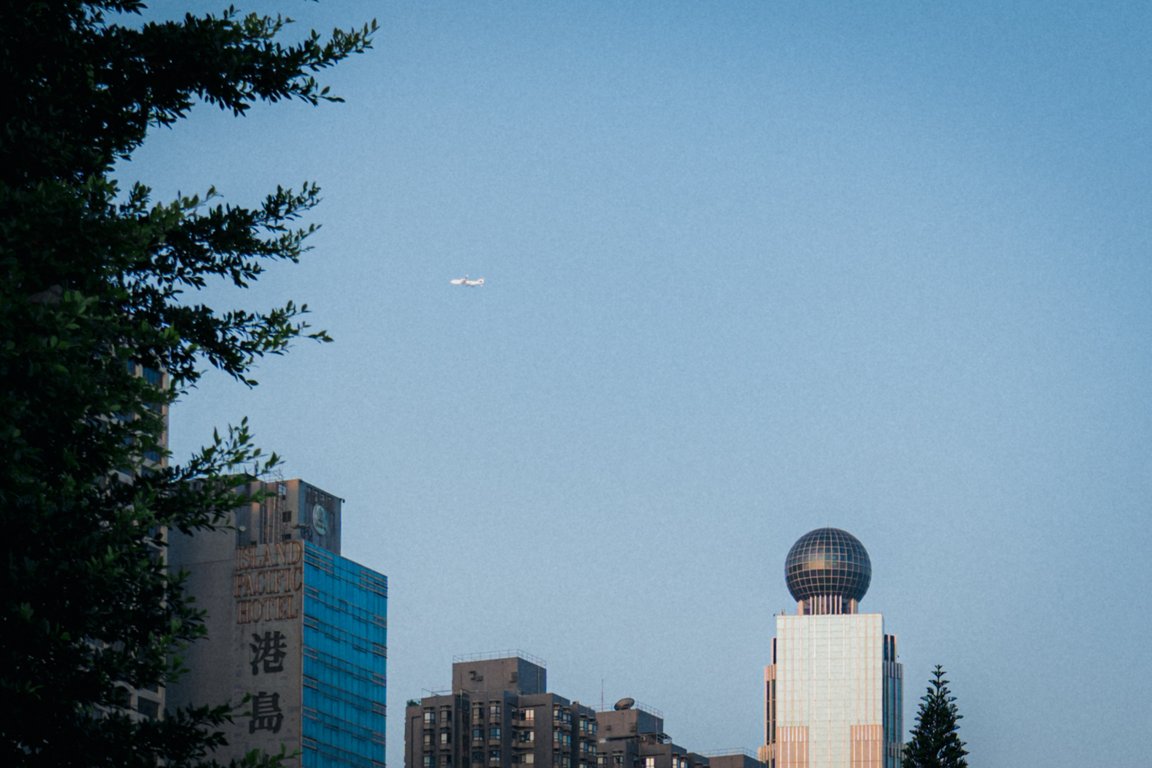
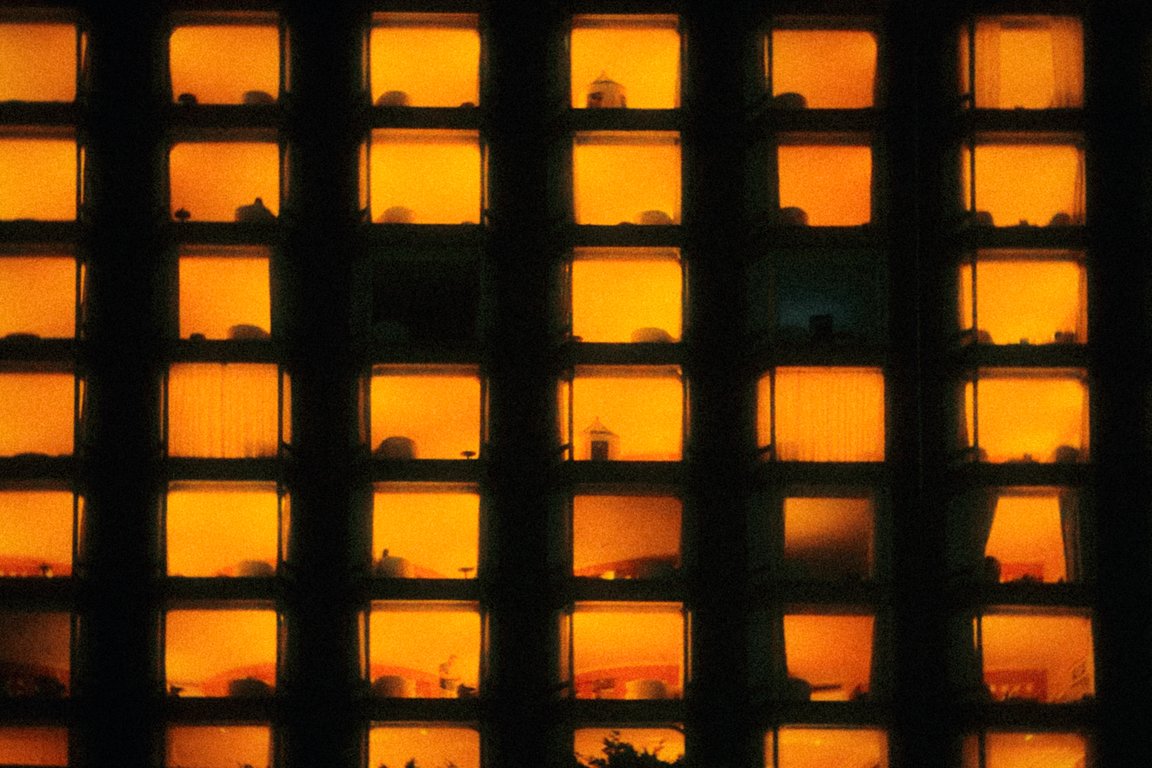
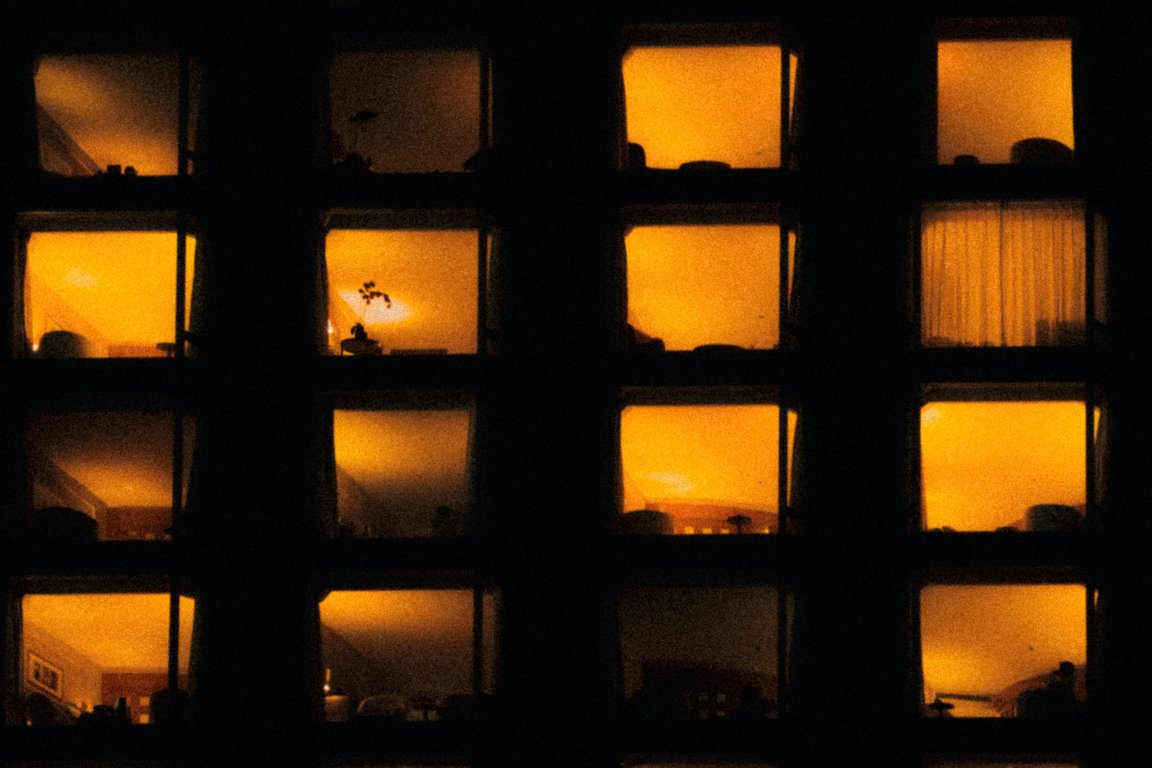
As I stepped out of the airport, the red taxis were the first thing I noticed. On the road into the city, we passed container yards, cranes, bridges, and highways spread across a port larger than any I had seen before, and their scale startled me. Hong Kong’s harbour is one of the busiest in the world, and the city itself is built on an extreme geography: over 7 million people packed into a territory of just over 1,100 square kilometres, with most of the land carved into steep hills and reclaimed coastline. Much of what looks like “ground level” in Hong Kong is actually built on land reclaimed from the sea over decades of engineering projects. From the bus, I could also see the classic sight of towering residential buildings and laundry hanging from metal racks fixed outside the windows. I later learnt that these external drying racks are a practical response to limited indoor space and high humidity, and they have become an informal part of the city’s visual identity. With balconies almost non-existent in many public housing estates and older private blocks due to the scarcity and cost of real estate, residents use the space outside their walls to hang laundry, air bedding, and store everyday items.
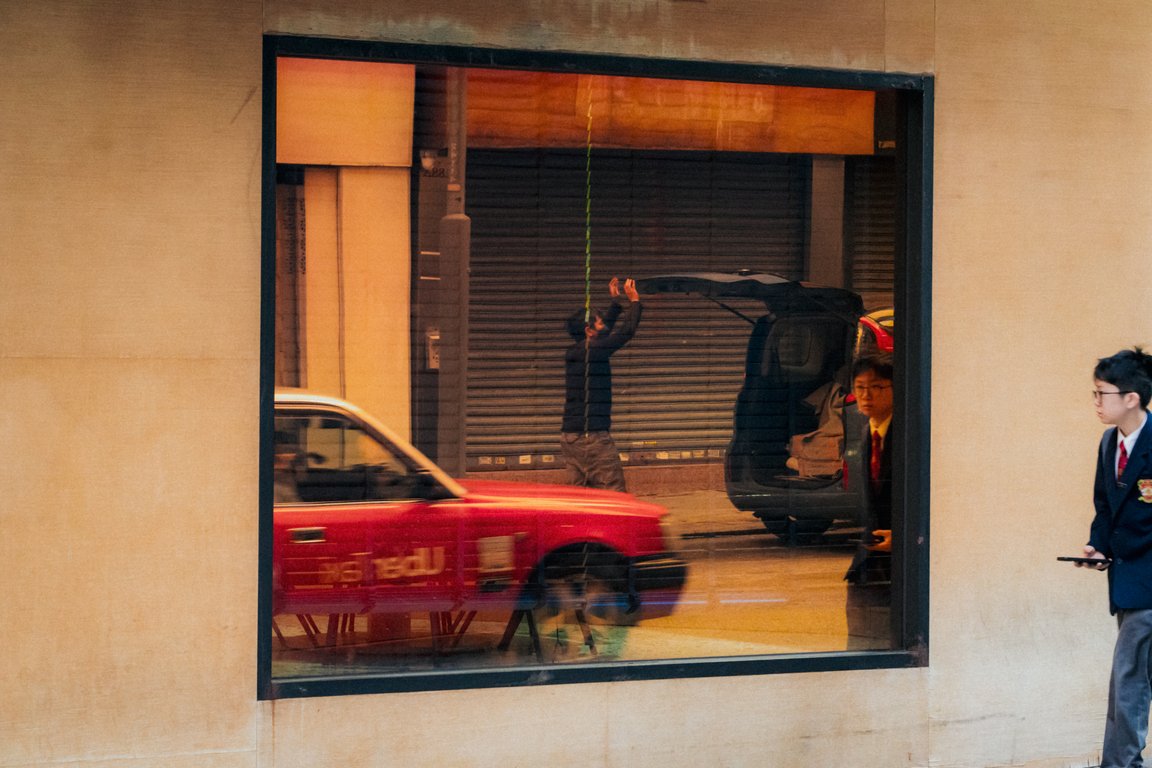
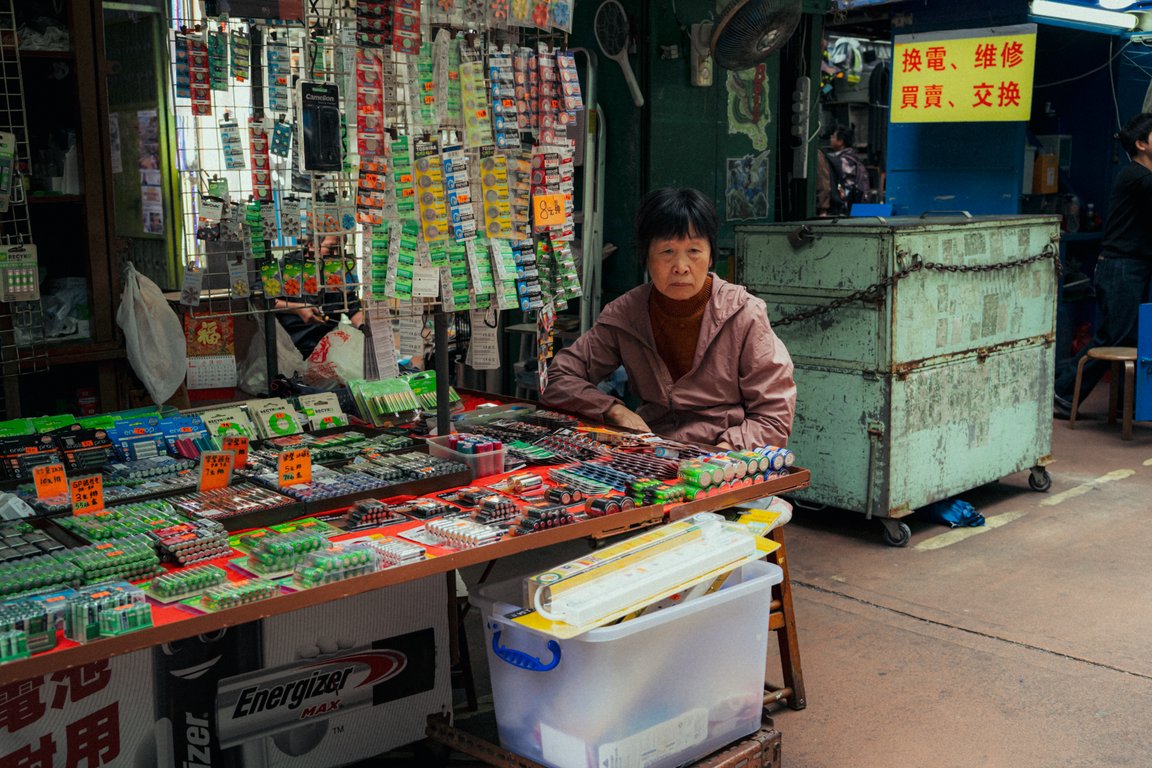
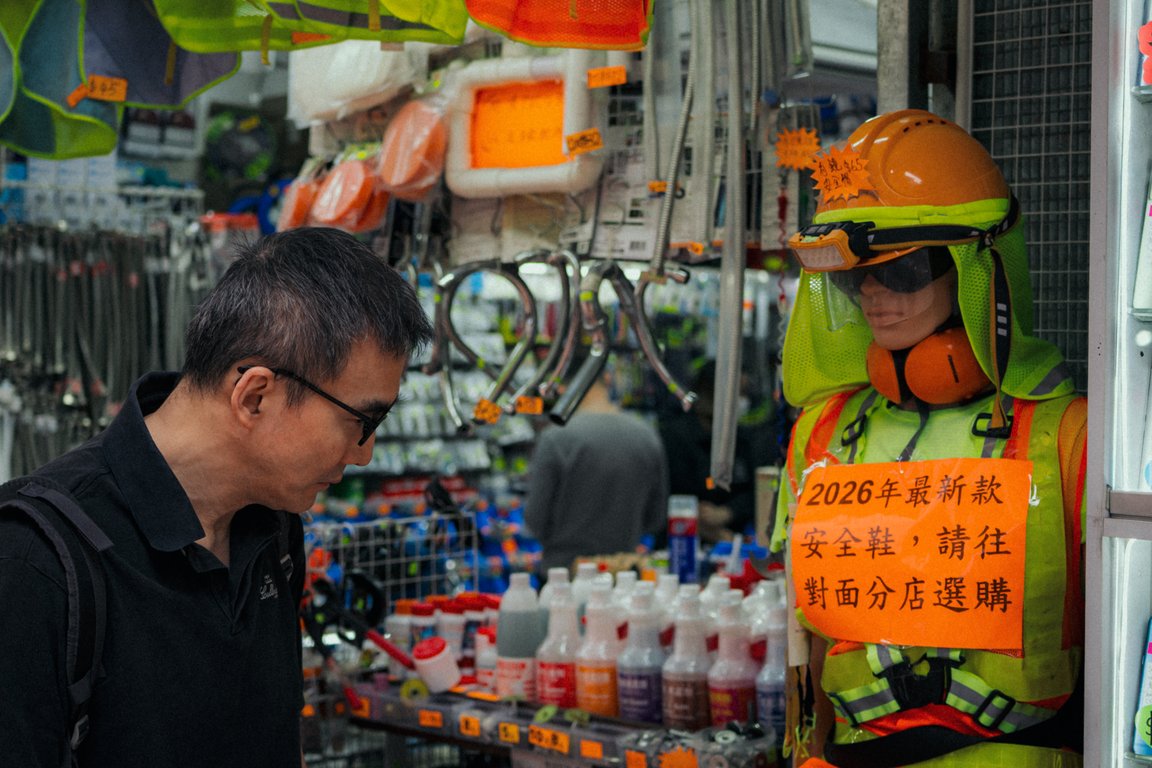
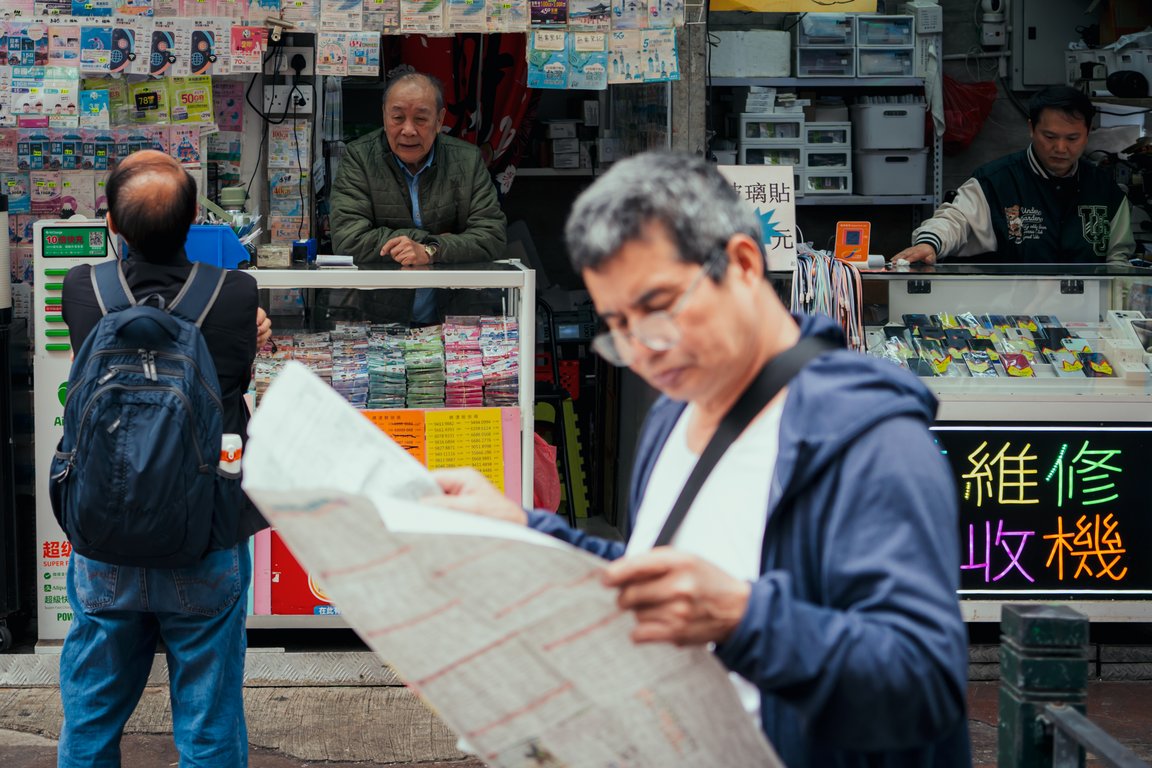
After settling into the hotel, I spent much of the day walking and shooting through Sham Shui Po. The neighborhood felt like a working, unpolished side of Hong Kong, where commerce is intensely organized by street. One stretch is devoted to second-hand electronics and repair goods, another to textiles and sewing supplies, and others to hardware, tools, and household items spilling onto the pavement. Each lane has its own logic, almost like a different market within the same system, with distinct colors, materials, and rhythms of trade. It reminded me of Delhi’s older shopping areas, like Chandni Chowk or Sadar Bazaar, where entire streets also specialize in one category of goods. But here the density felt more compressed and continuous, with less chaos and more quiet efficiency. The result was a vibrant, functional ecosystem of buying and selling that felt deeply lived-in rather than curated.
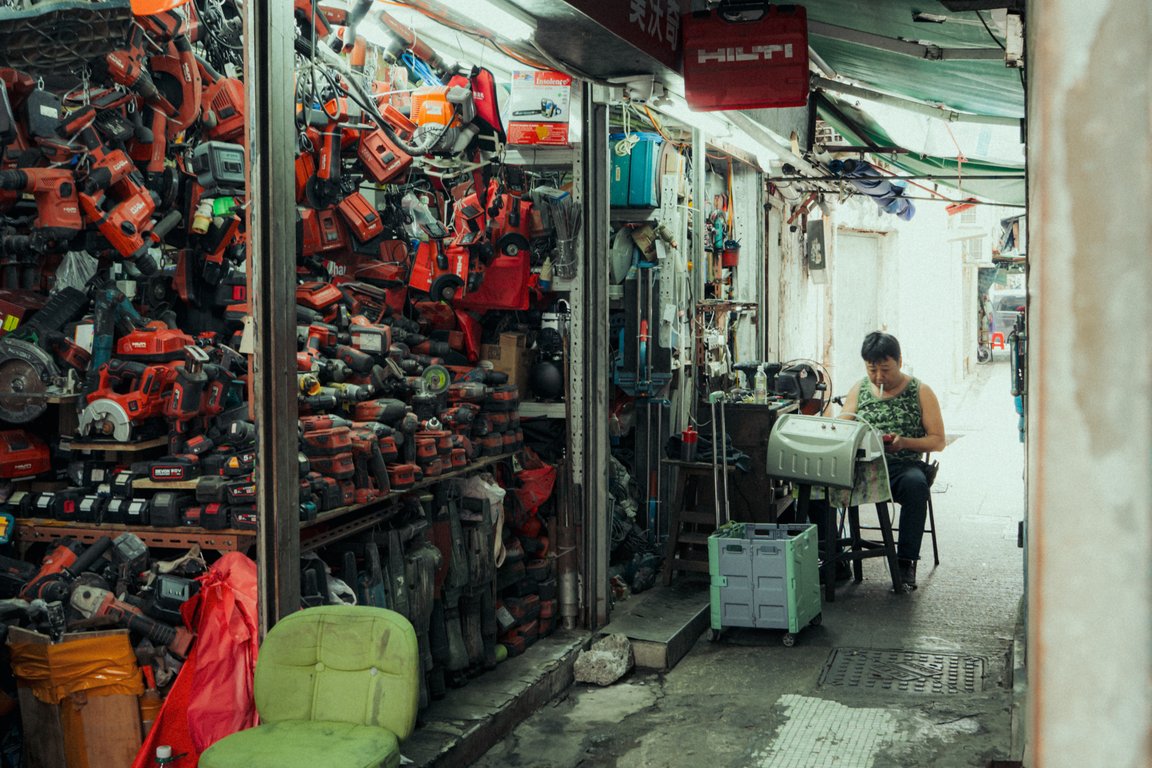
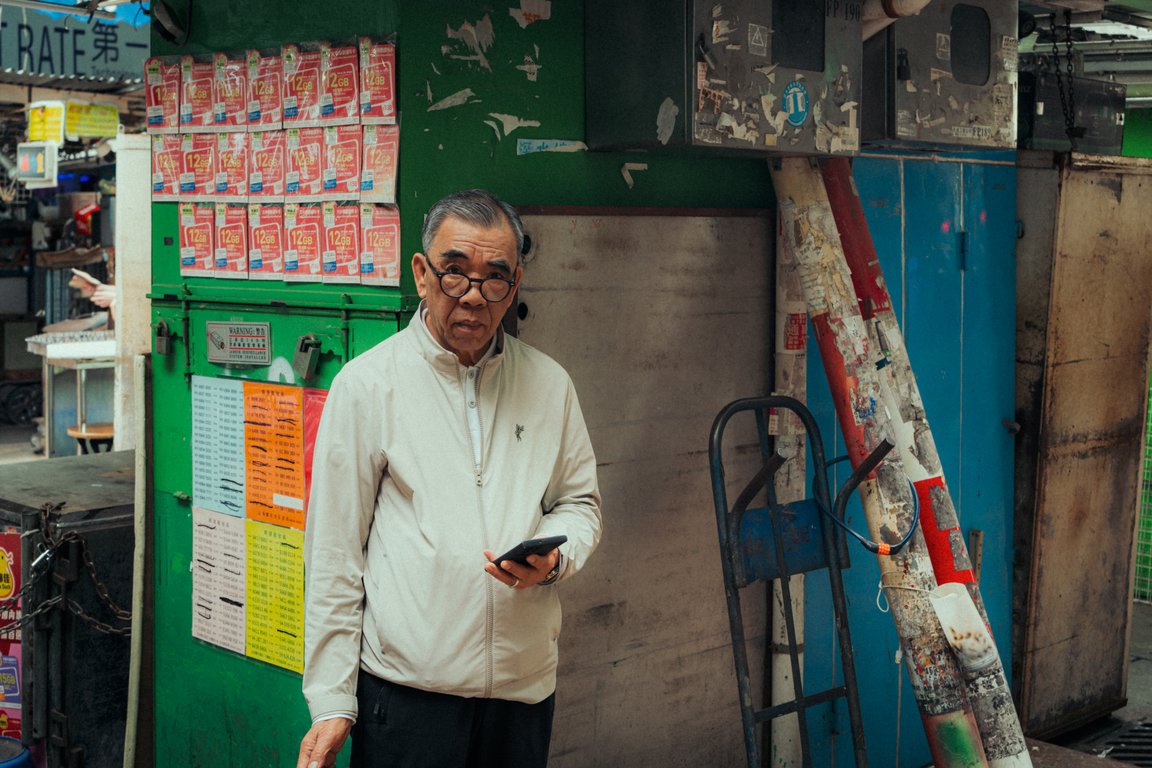
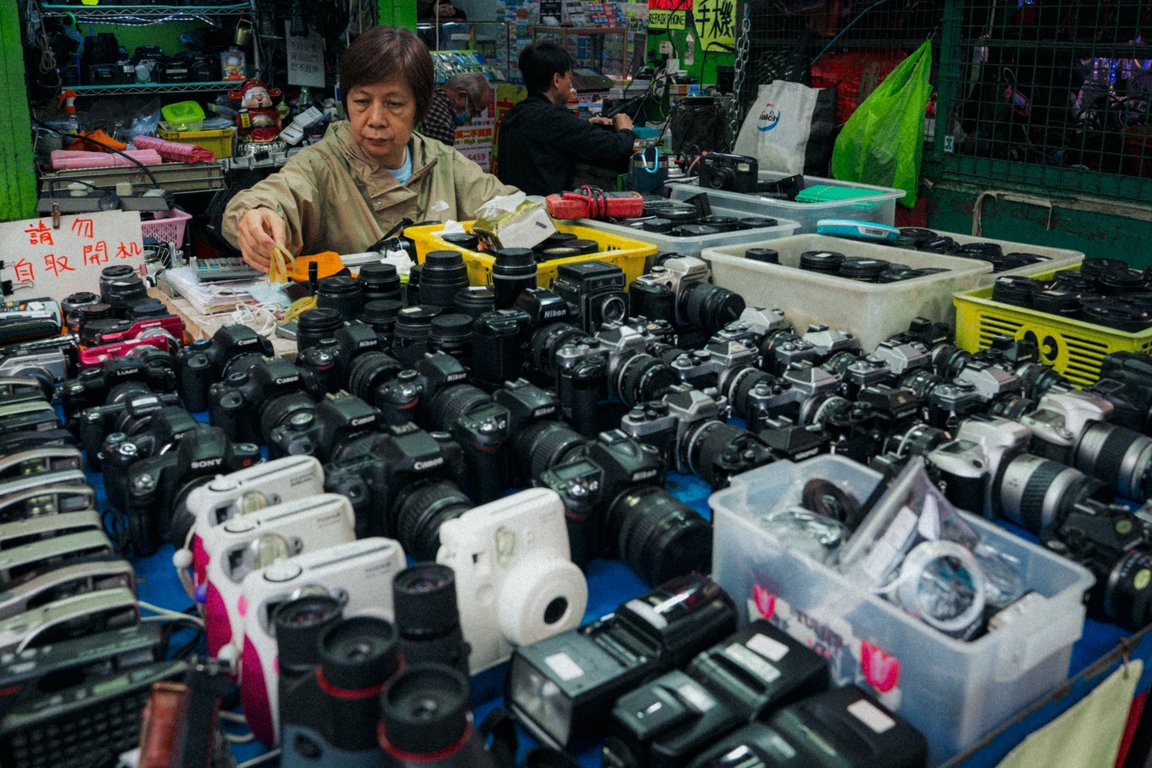
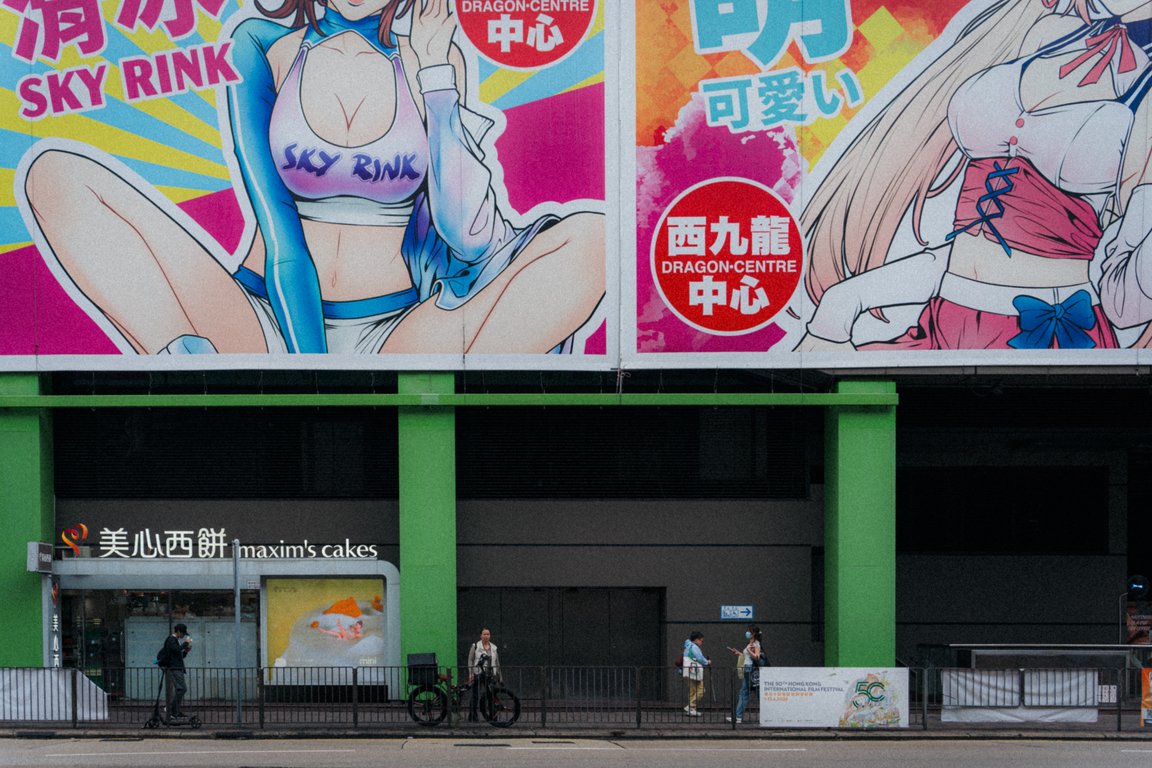
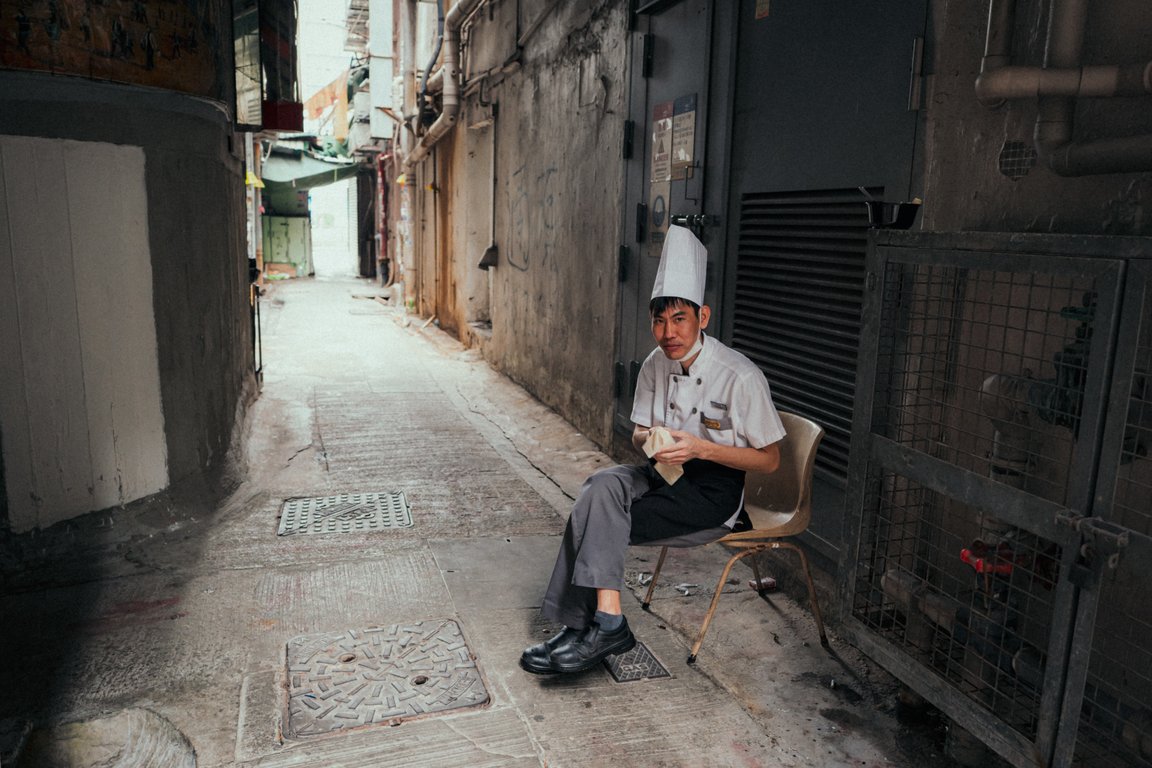
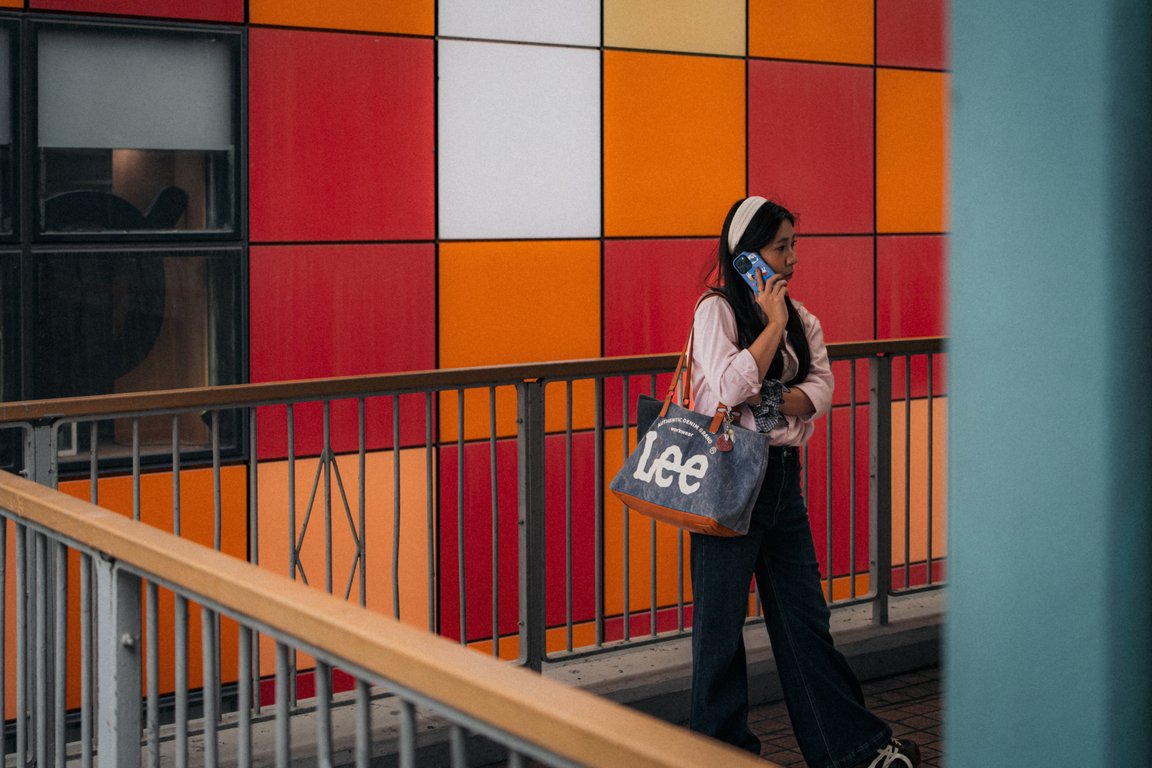
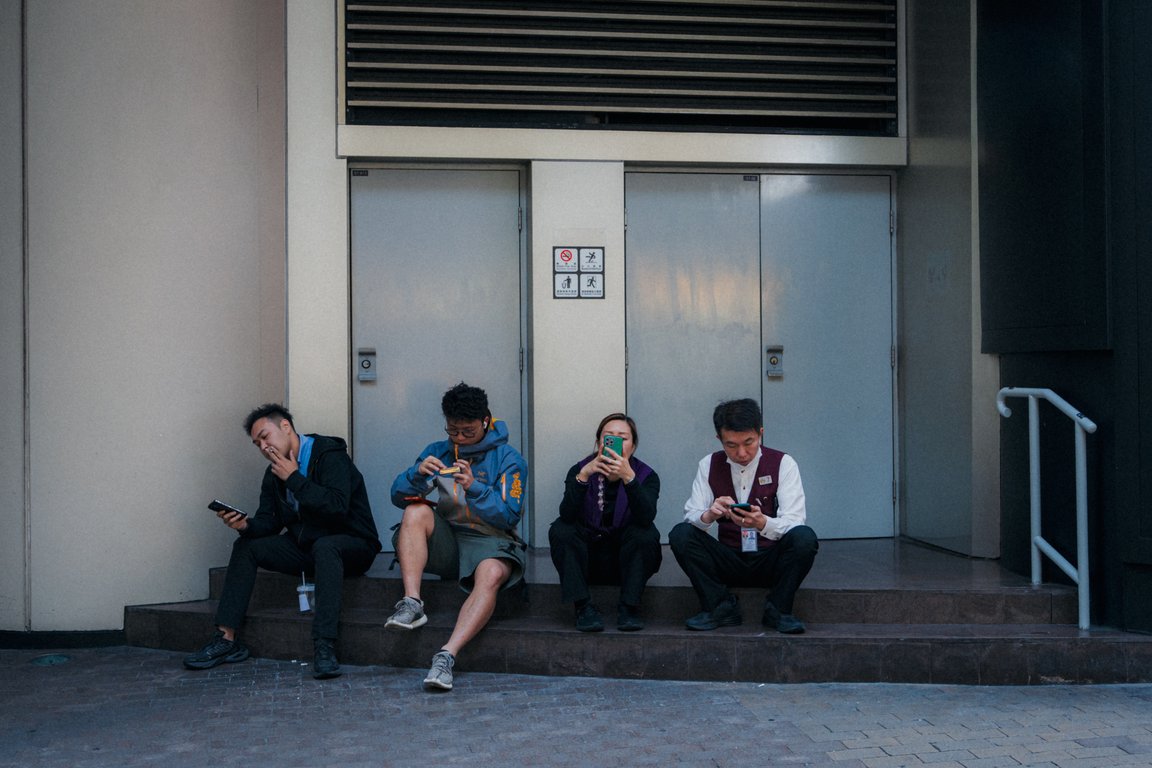
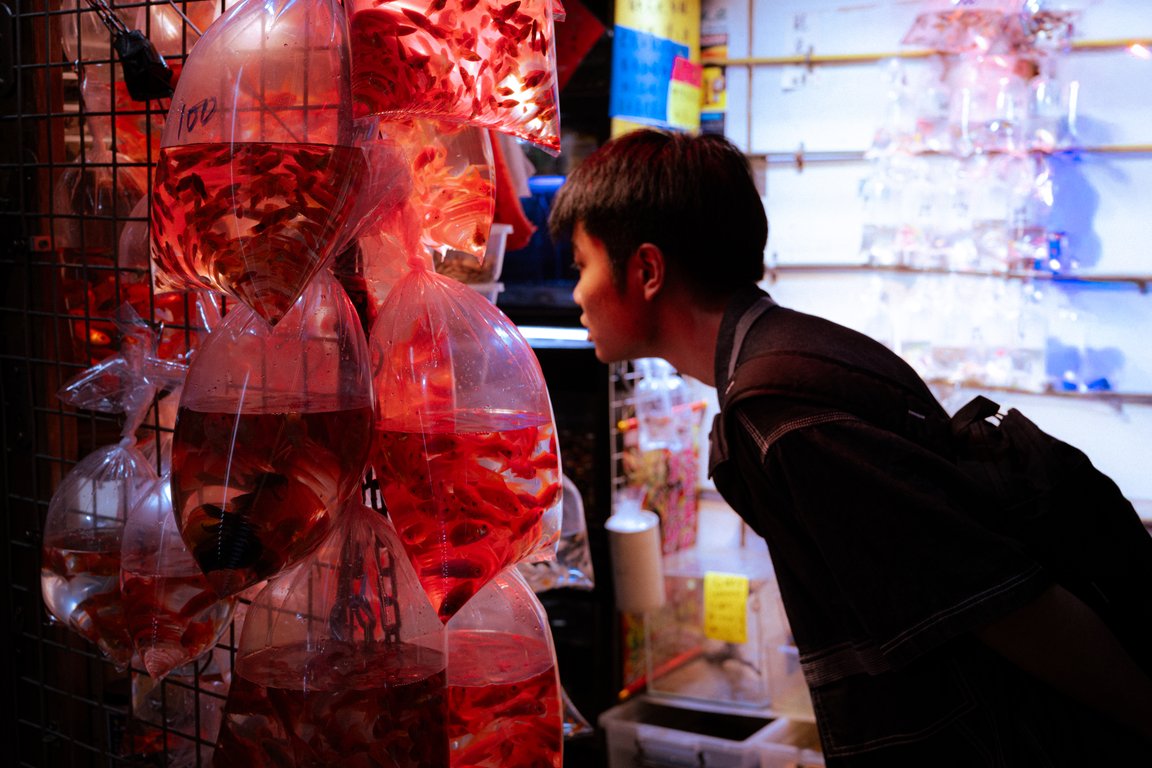
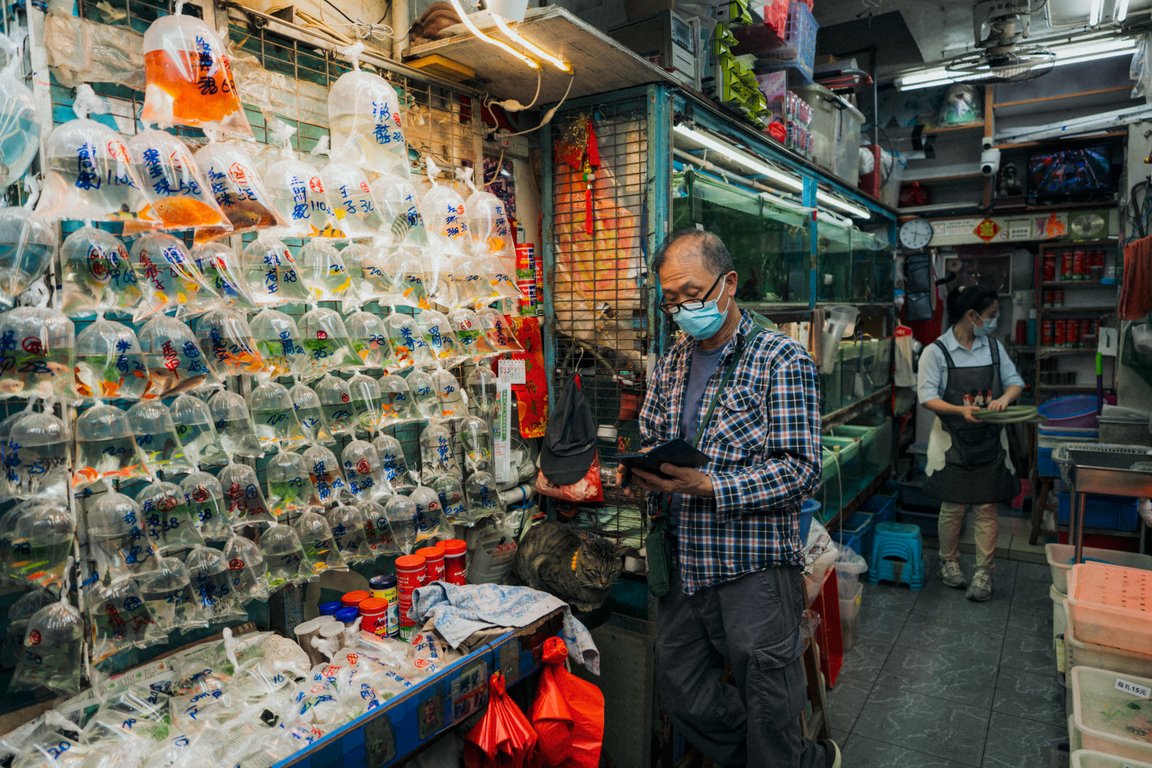
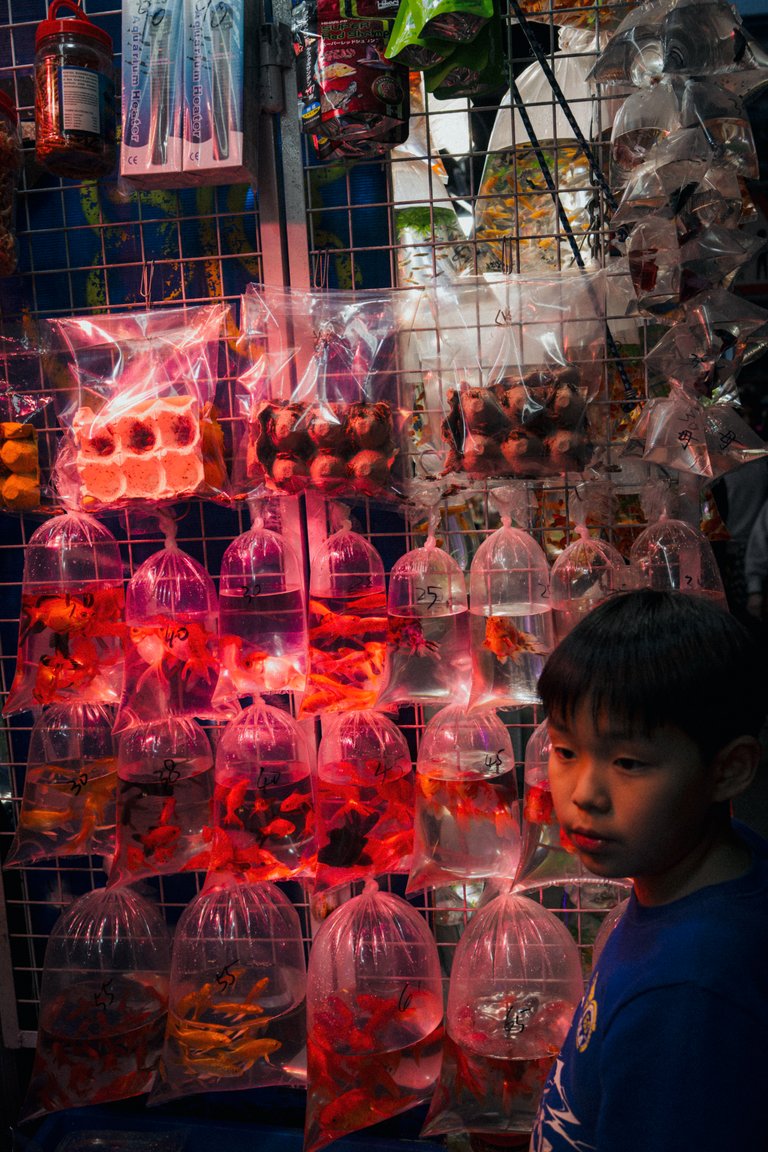
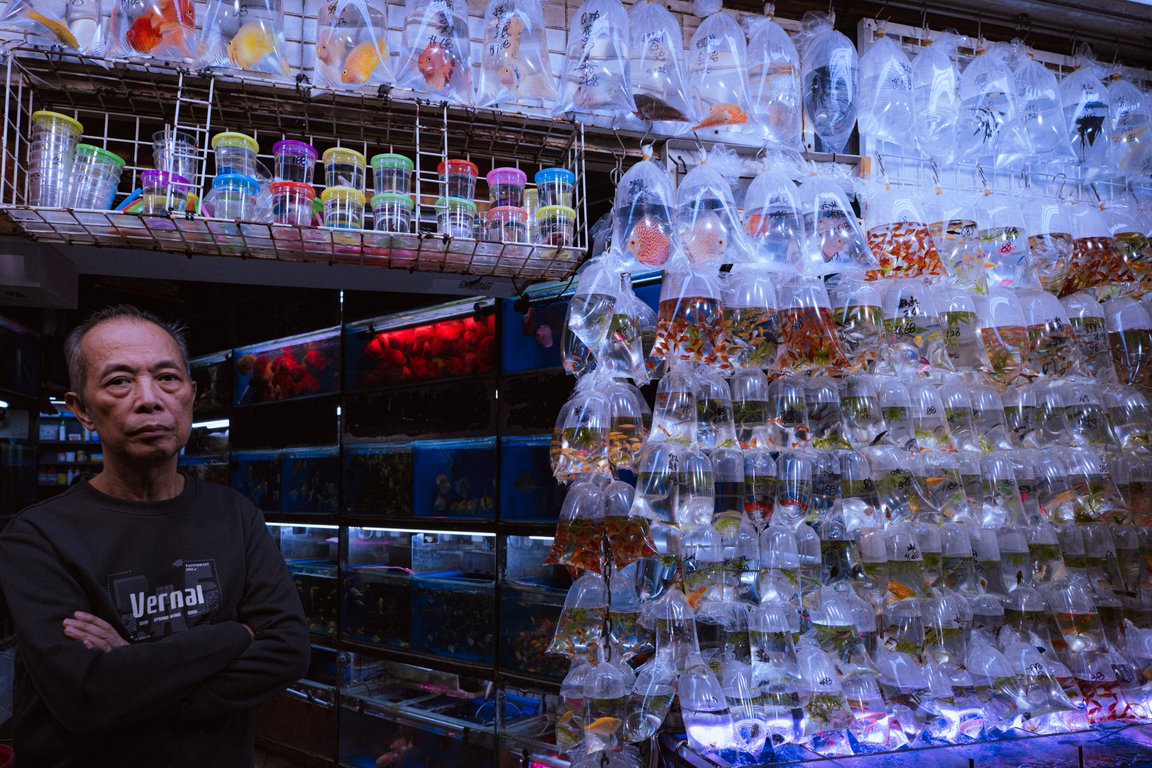
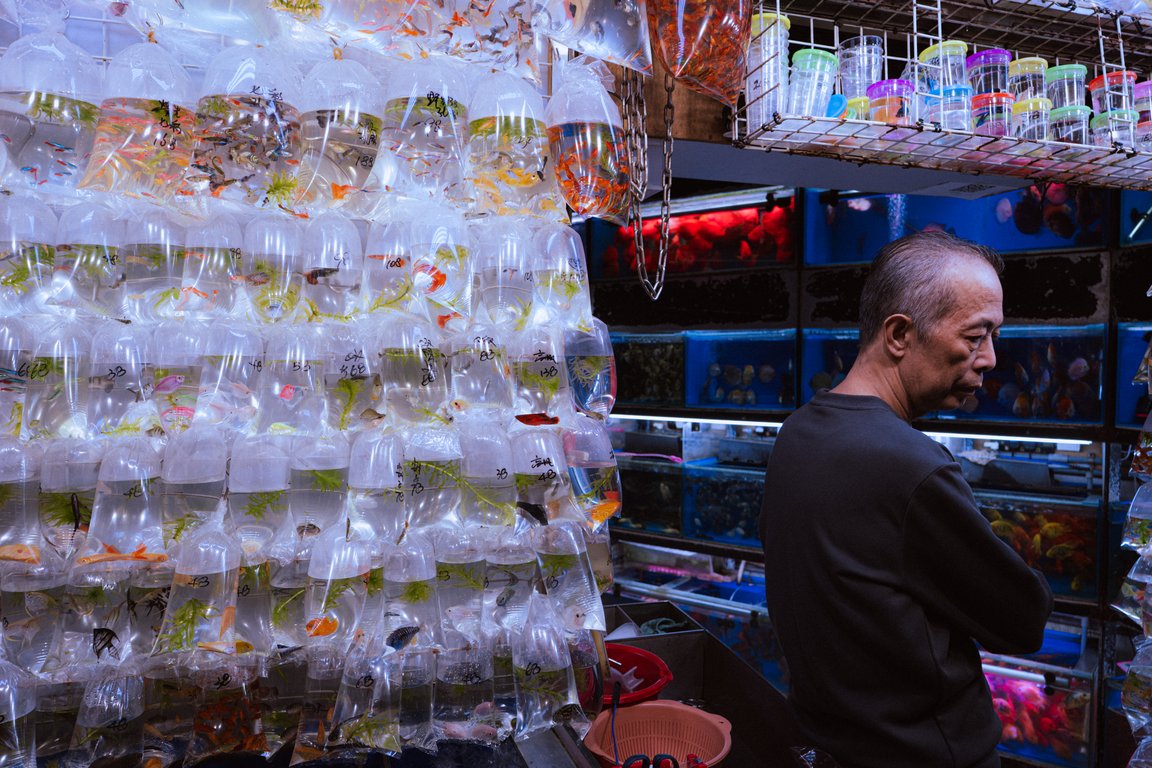
Before leaving for Hong Kong, I had looked up interesting markets, and one of the stranger ones that stood out was the Goldfish Market in Mong Kok. It immediately reminded me of the saturated colors and neon lighting that are so characteristic of Wong Kar-wai’s films. In fact, Mong Kok itself has often been used as a visual reference point for that cinematic style, especially the dense, humid glow of Chungking Express and In the Mood for Love. This was one of the most cinematic areas I photographed. Fish hung outside the shops in clear plastic bags, lit by harsh fluorescent tubes that made the water glow almost unnaturally. Inside, there were crickets sold as food, turtles in shallow basins, and shops with geckos, snakes, puppies, rabbits, and hamsters. It felt less like a single market and more like a cluster of overlapping micro-worlds, each with its own ecosystem and soundscape. Fish also carry strong associations of luck and prosperity in Chinese culture, which partly explains their popularity. In Cantonese, the word for fish (yú) sounds like the word for abundance, and goldfish in particular are often kept as symbols of wealth and good fortune—especially in businesses and homes.
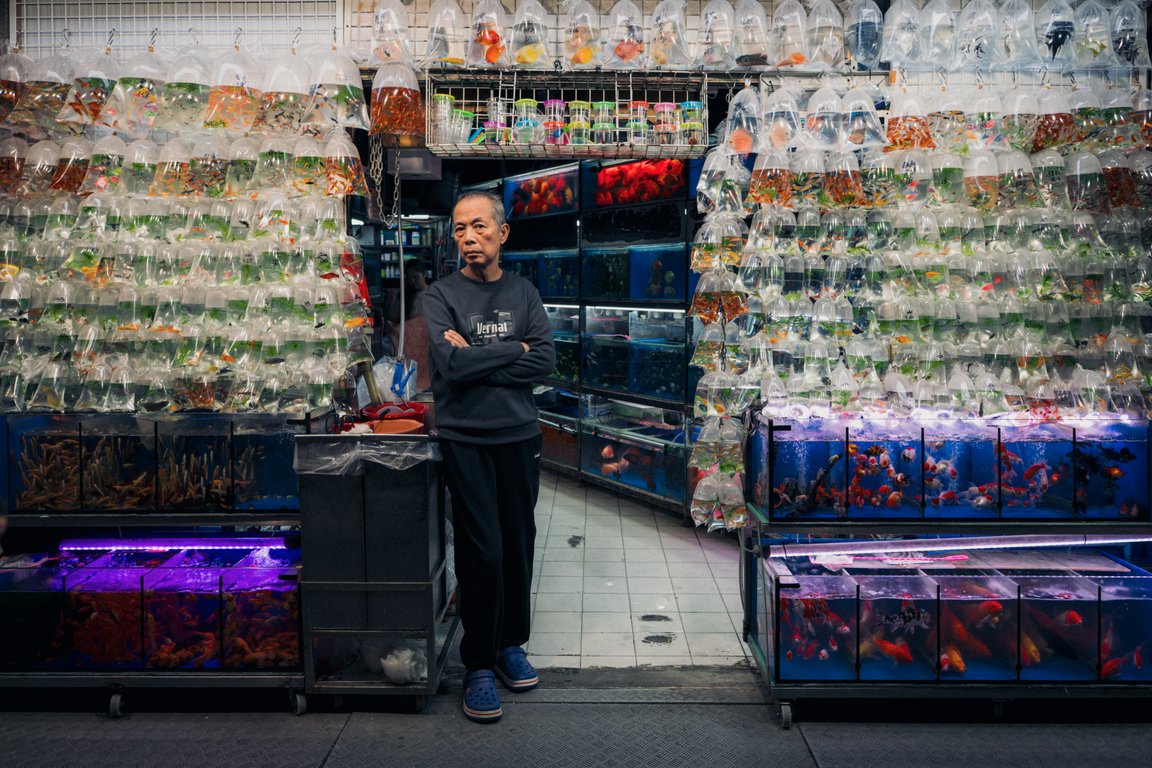
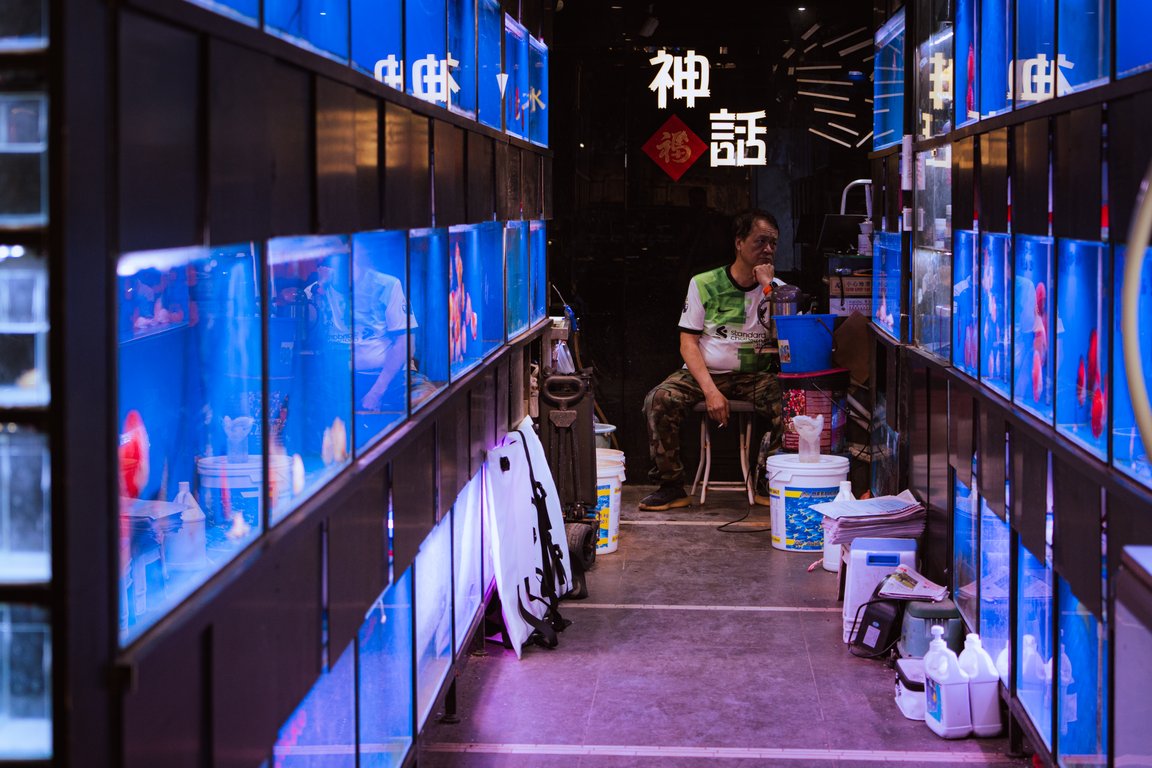
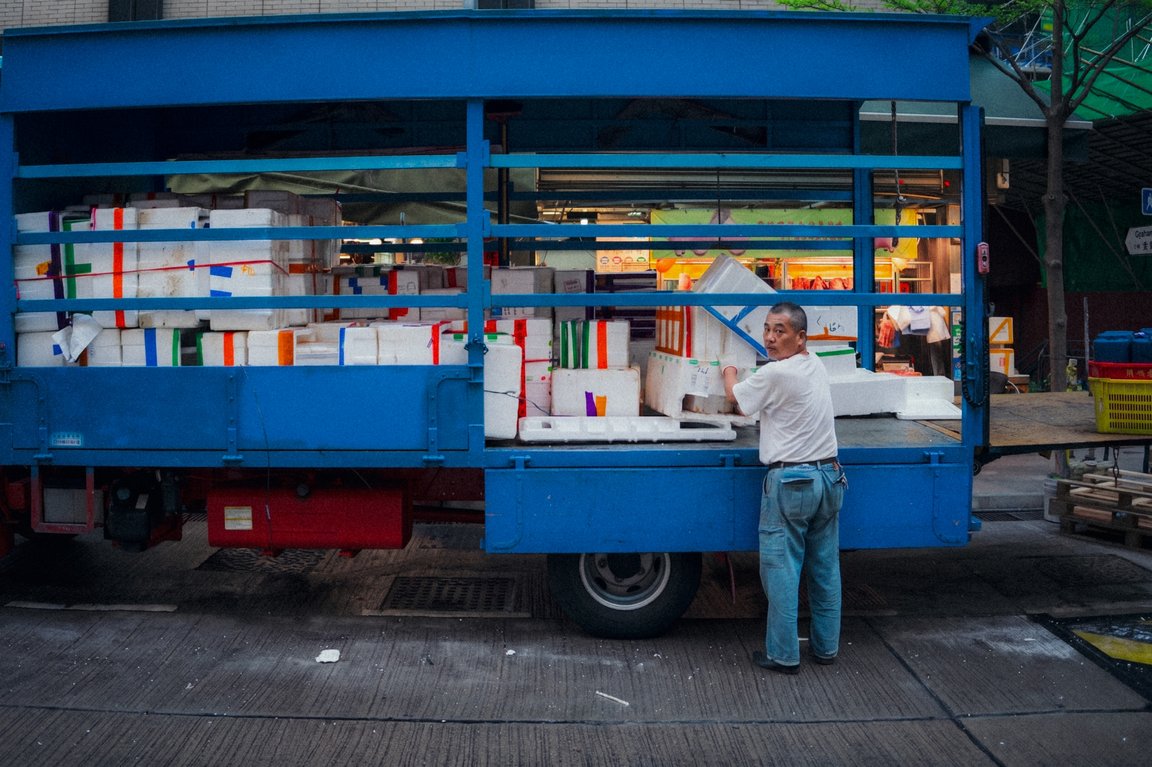
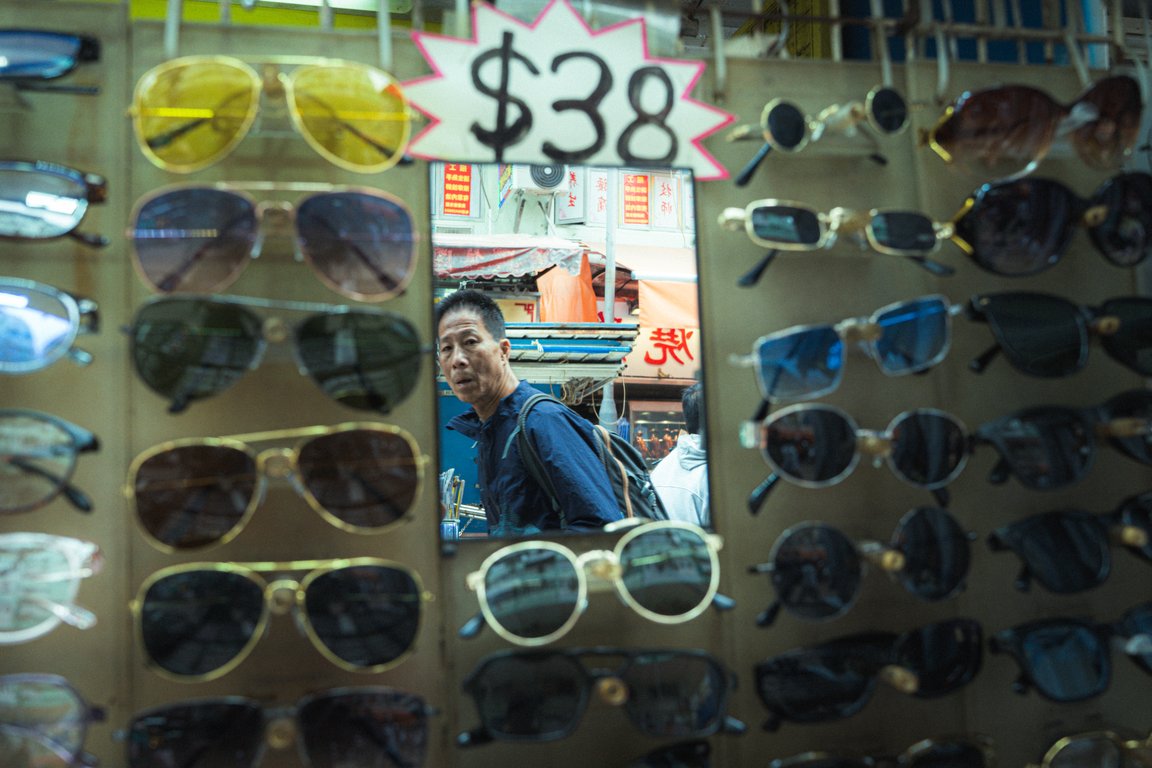
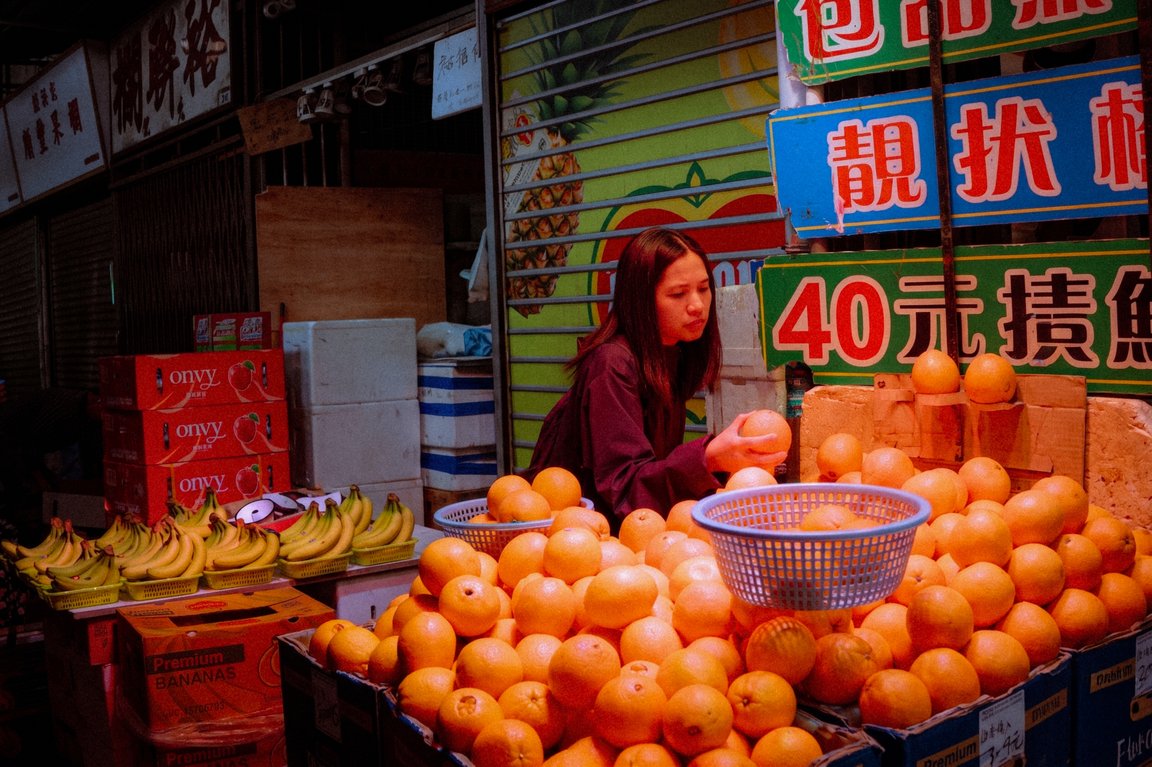
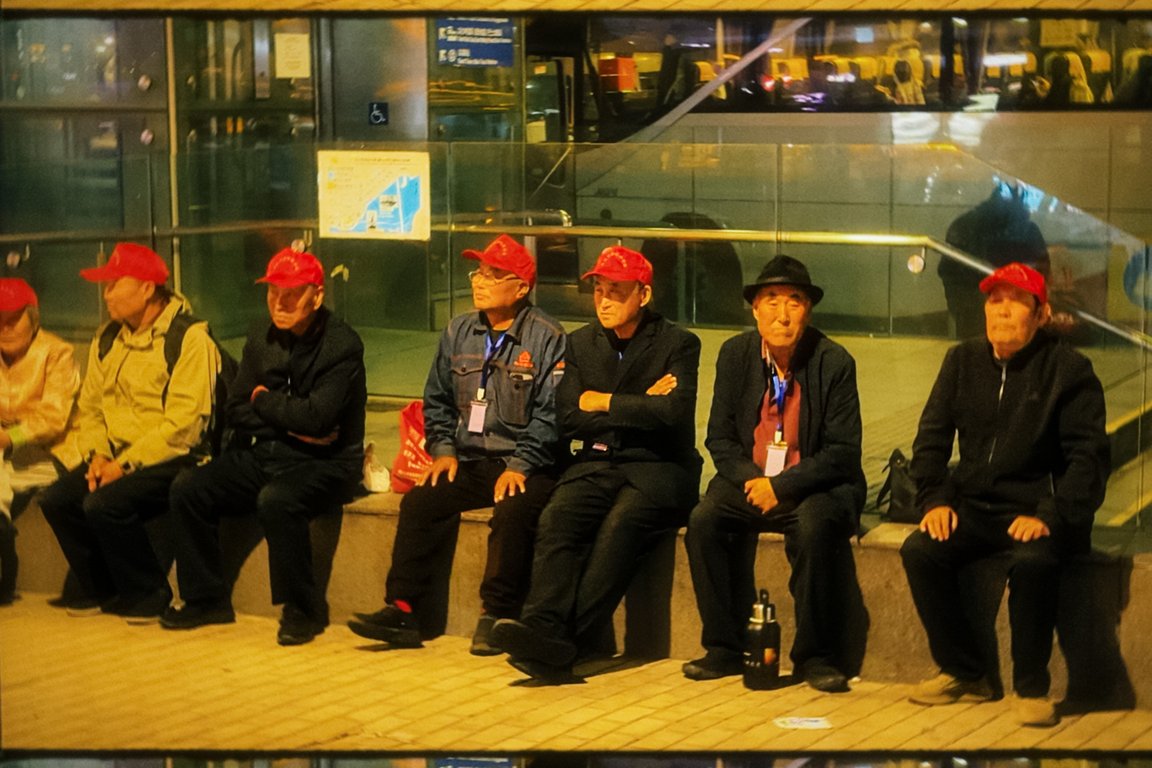
Hong Kong presented an overwhelming number of photographic opportunities. I would constantly notice scenes that felt worth capturing, but I often hesitated—caught between seeing the shot and actually taking it. That hesitation was familiar. On my first solo trip a few years earlier, it had often lasted just long enough for the moment to disappear entirely. I didn’t want to repeat that experience. So I adopted a simple rule for myself: ask for permission first, or ask for forgiveness later—but don’t remain stuck in indecision. The goal wasn’t aggression; it was momentum. I found that some of my strongest photographs came from moments where I acted before overthinking could intervene. I also experimented with a different approach when photographing people. Instead of immediately reaching for the camera, I would sometimes acknowledge what had drawn my attention—comment on someone’s clothing, expression, or presence, and turn that into a brief interaction. It often softened the distance between me and the scene. The tradeoff was that I sometimes lost the spontaneity of a candid shot, but I gained a different kind of connection to the moment.
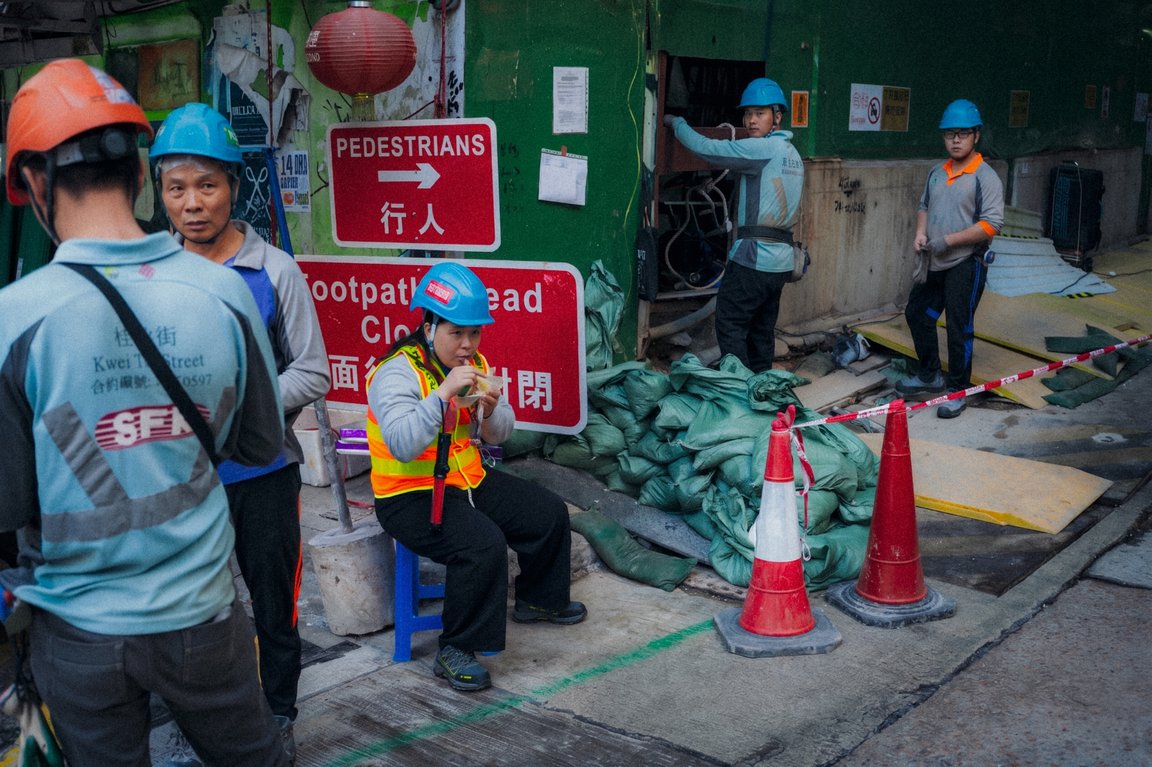
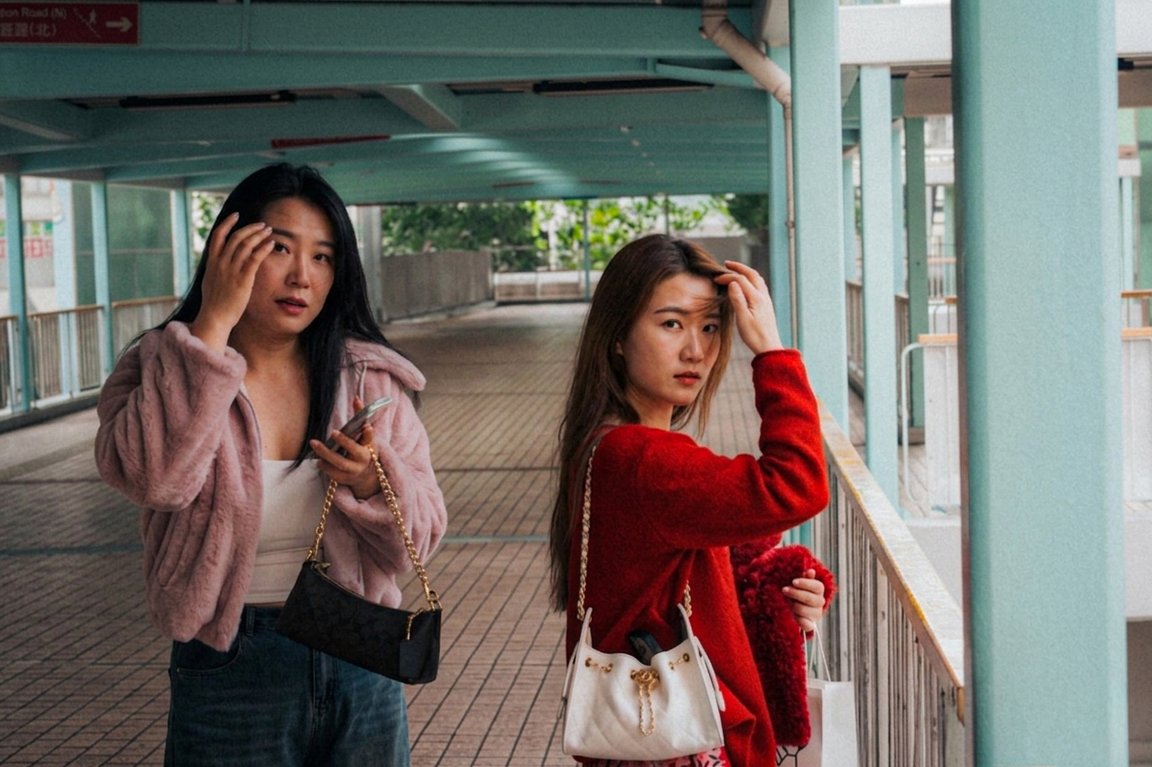
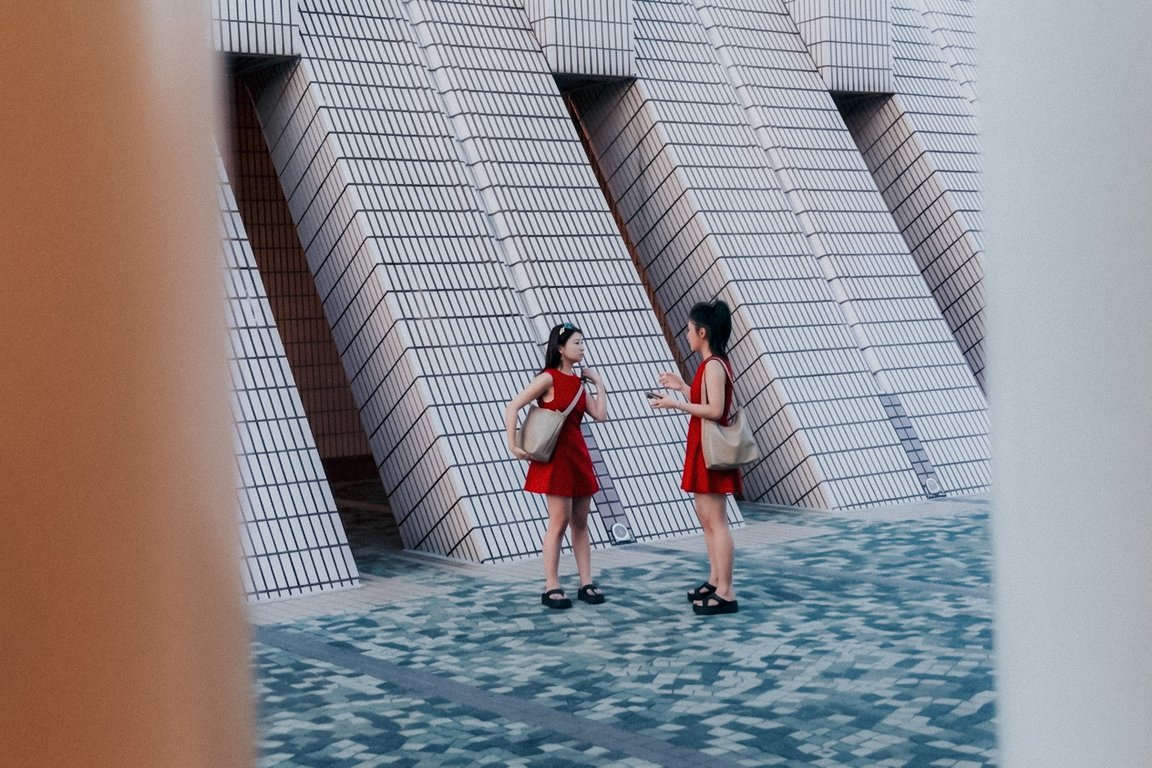
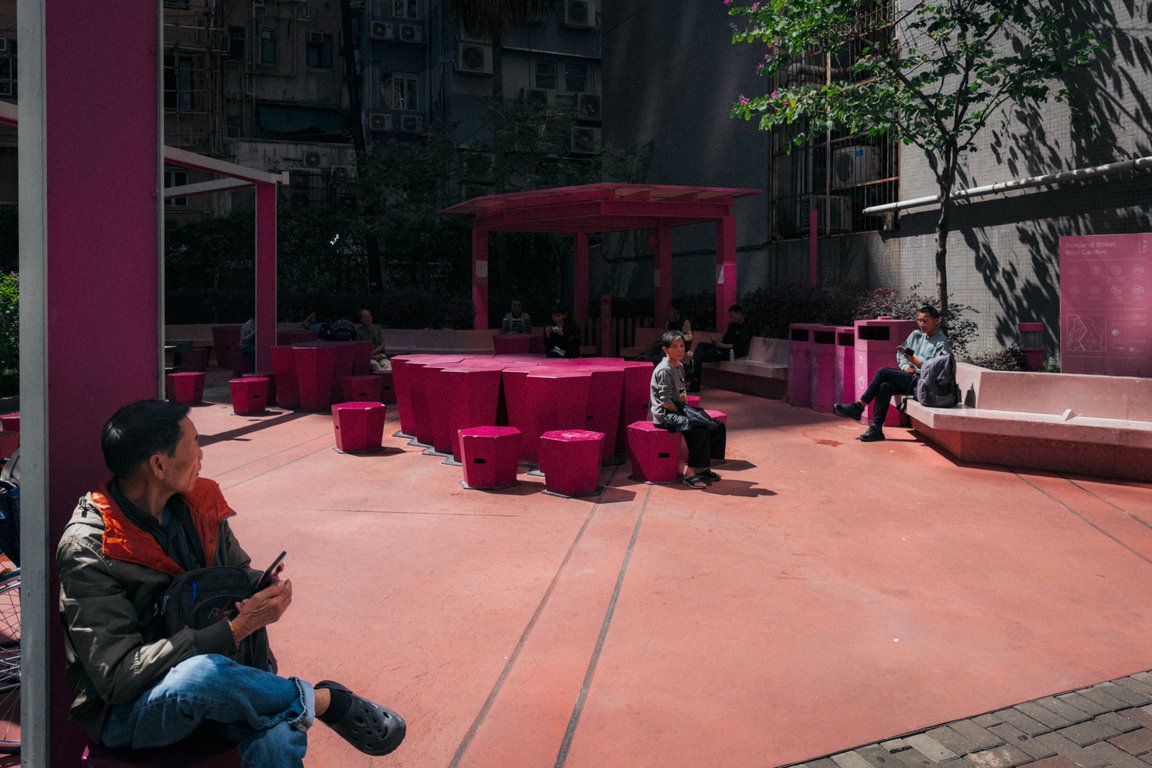
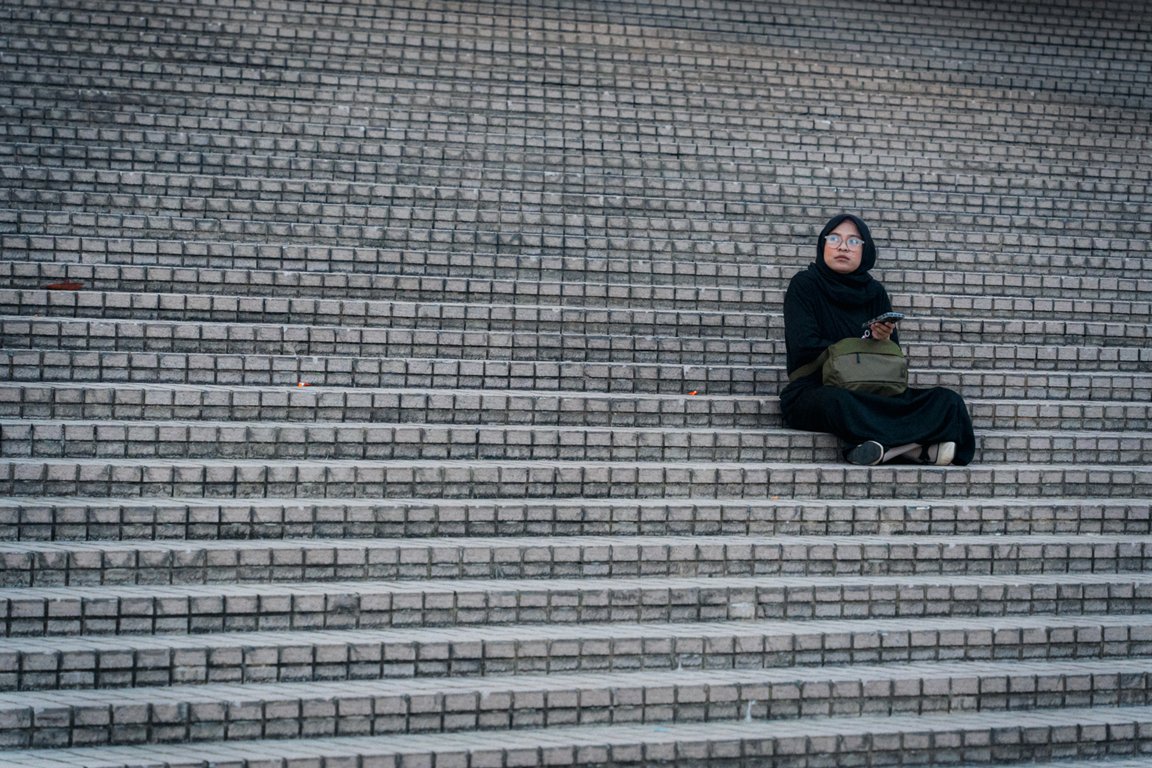
I also noticed how visible the Nepali and Pakistani communities were, something that I had not expected. Many Nepali families in Hong Kong trace their presence back to the British colonial period, when Gurkha soldiers were stationed here and later settled with their families after service. Pakistani migration also grew through similar colonial-era links, with people arriving to work in policing, trading, and later in small businesses like tailoring, grocery shops, and food stalls. Over time, these communities became part of the city’s everyday fabric, especially in neighbourhoods like Tsim Sha Tsui and Yau Ma Tei, where you see halal restaurants, prayer spaces tucked above street level, and shops run across generations.
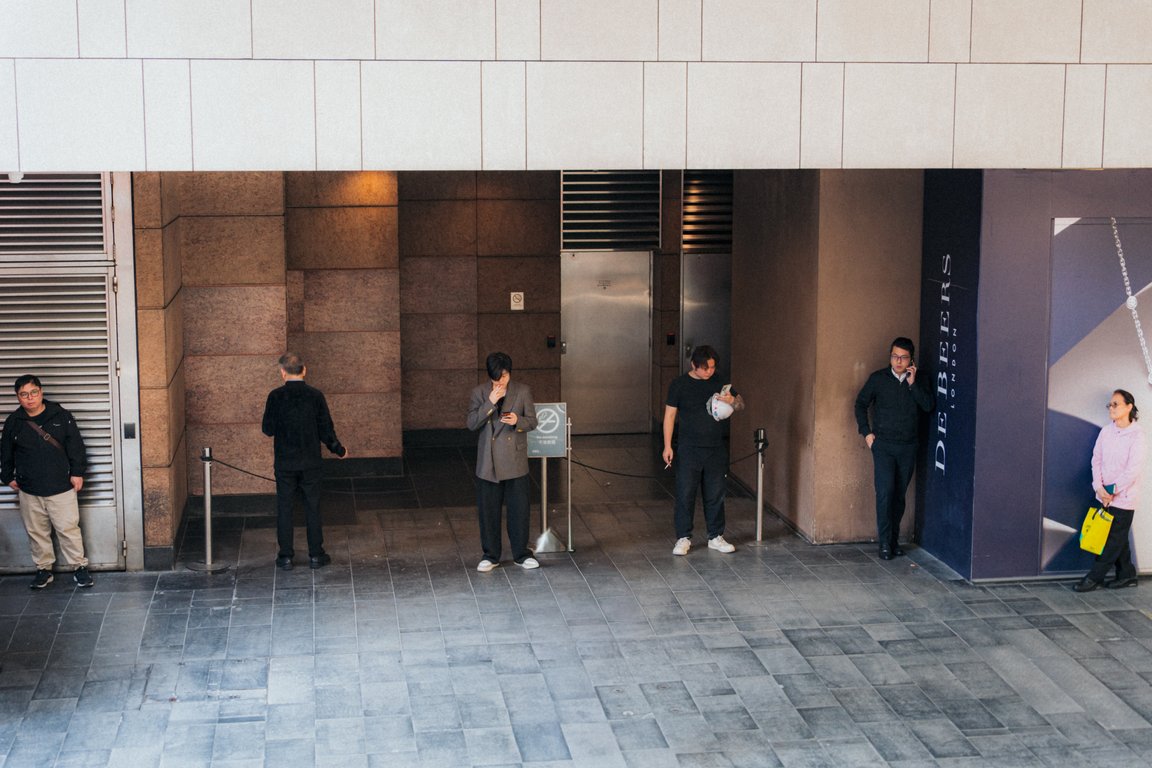
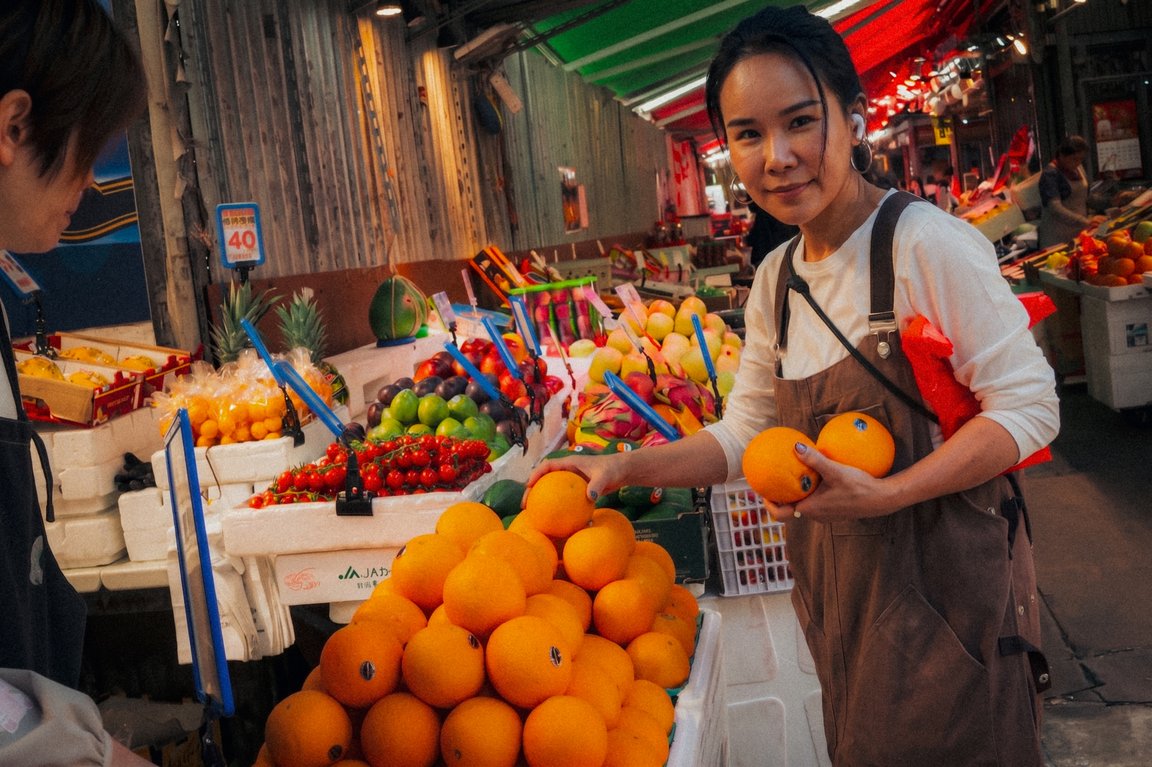
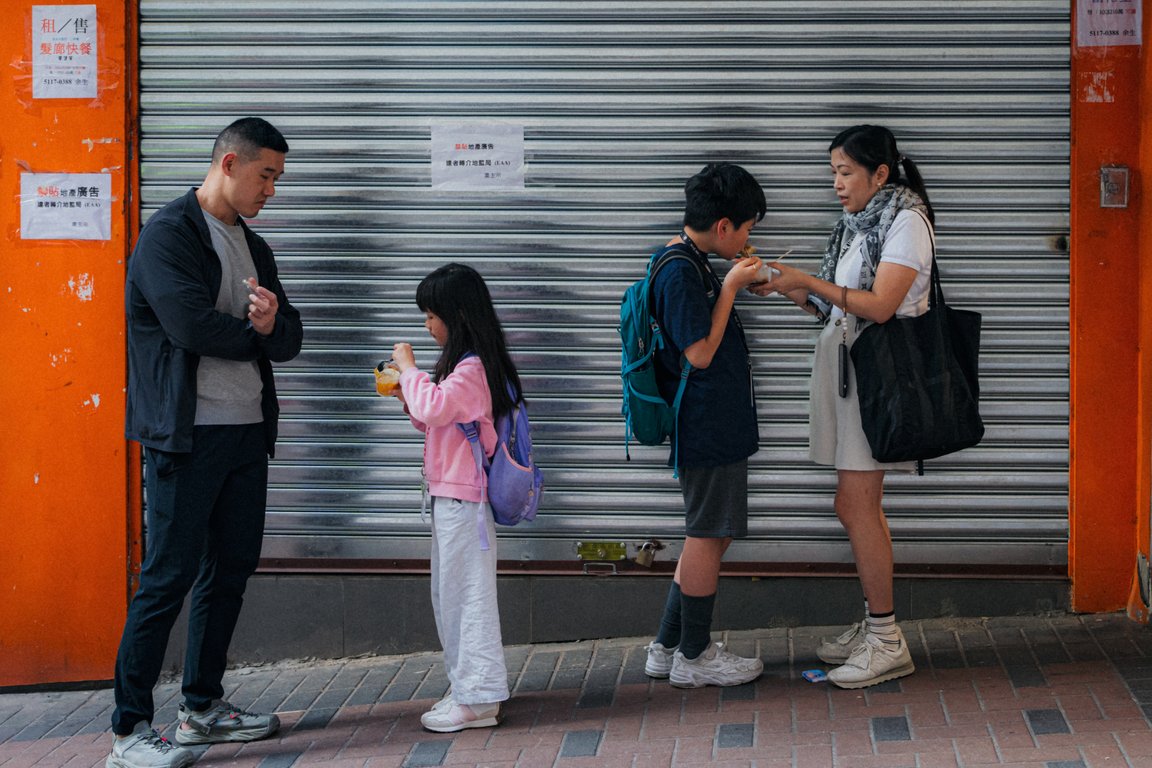
I spent my first evening eating and walking around Temple Street. After dark, I passed hostess karaoke parlours with photographs of female singers covering the walls outside. The doors remained closed, but live music carried out into the street. I later learned that Hong Kong’s hostess karaoke culture developed partly from Japanese karaoke bars and also draws some inspiration from the old Chinese “singsong girls” tradition. These venues typically involve paid companionship and singing rather than formal performances, and form part of the city’s late-night hospitality economy. A little further along, fortune tellers sat under small lights offering palm readings, face readings and card-based divination. The practice has a long history in Chinese folk religion and popular belief, where people have used it for guidance on relationships, money and personal decisions. There were also stalls selling guilinggao, a dark and bitter herbal dessert often called tortoise jelly. It began in southern China as a medicinal preparation in traditional Chinese medicine and was believed to have cooling properties. Despite the name, modern versions usually do not contain tortoise shell. Today it is commonly eaten as a dessert, usually with syrup or honey to soften the bitterness. What I liked about Temple Street was how ordinary all of this seemed besides all the tourist food stalls and one another.
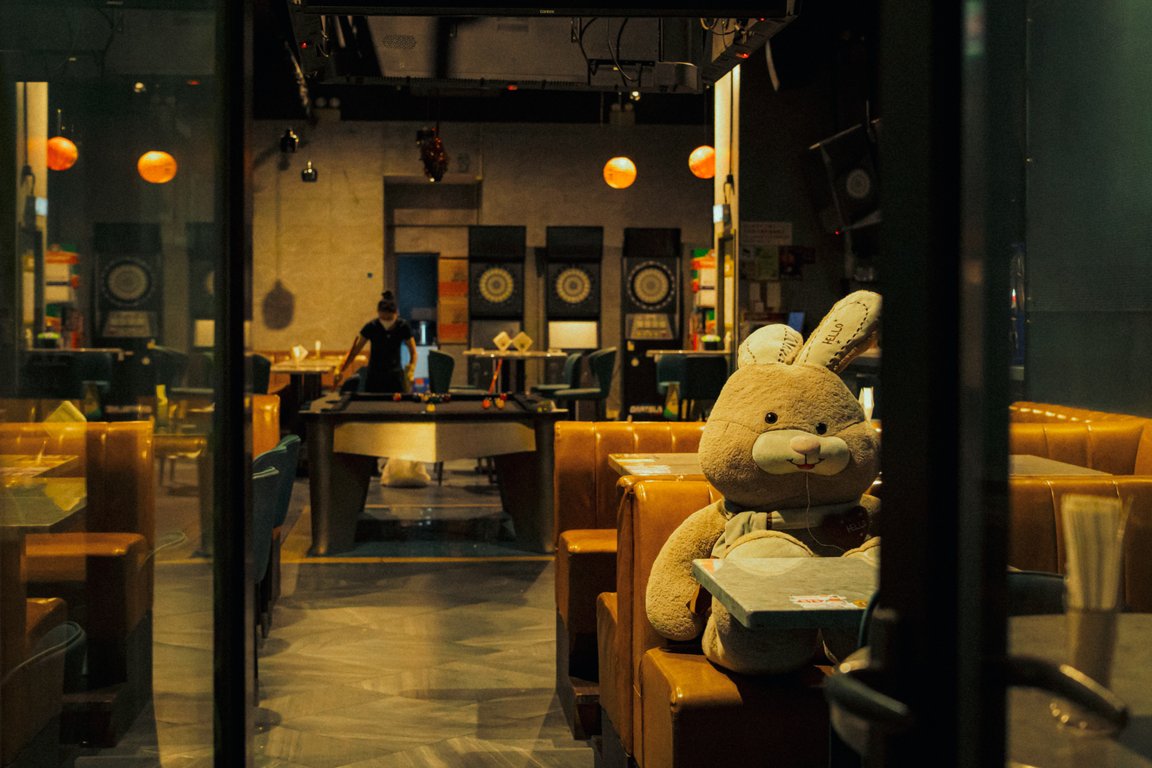
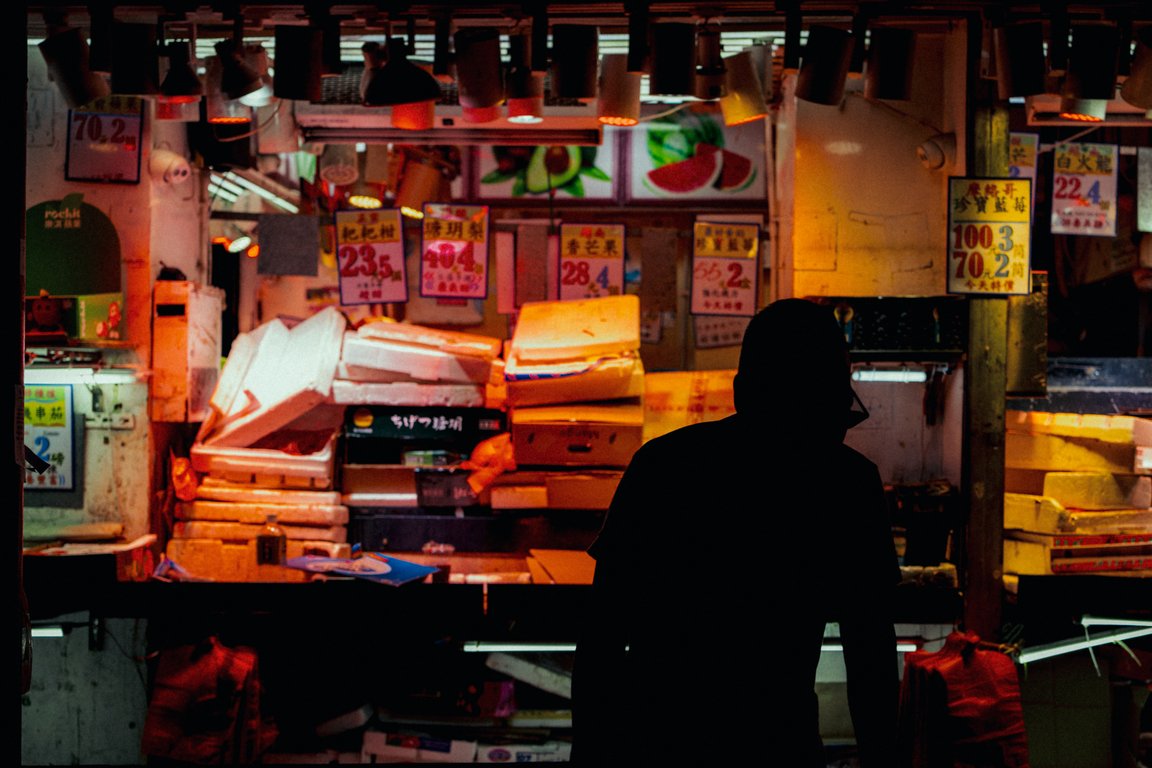
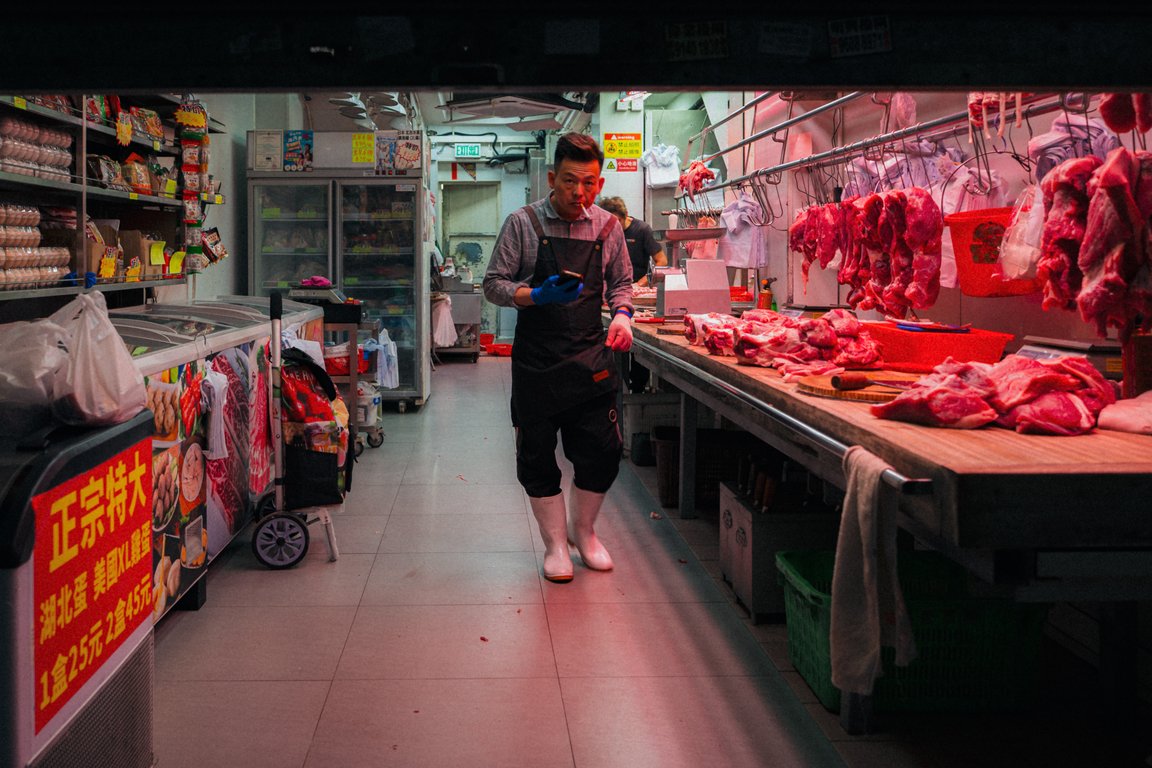
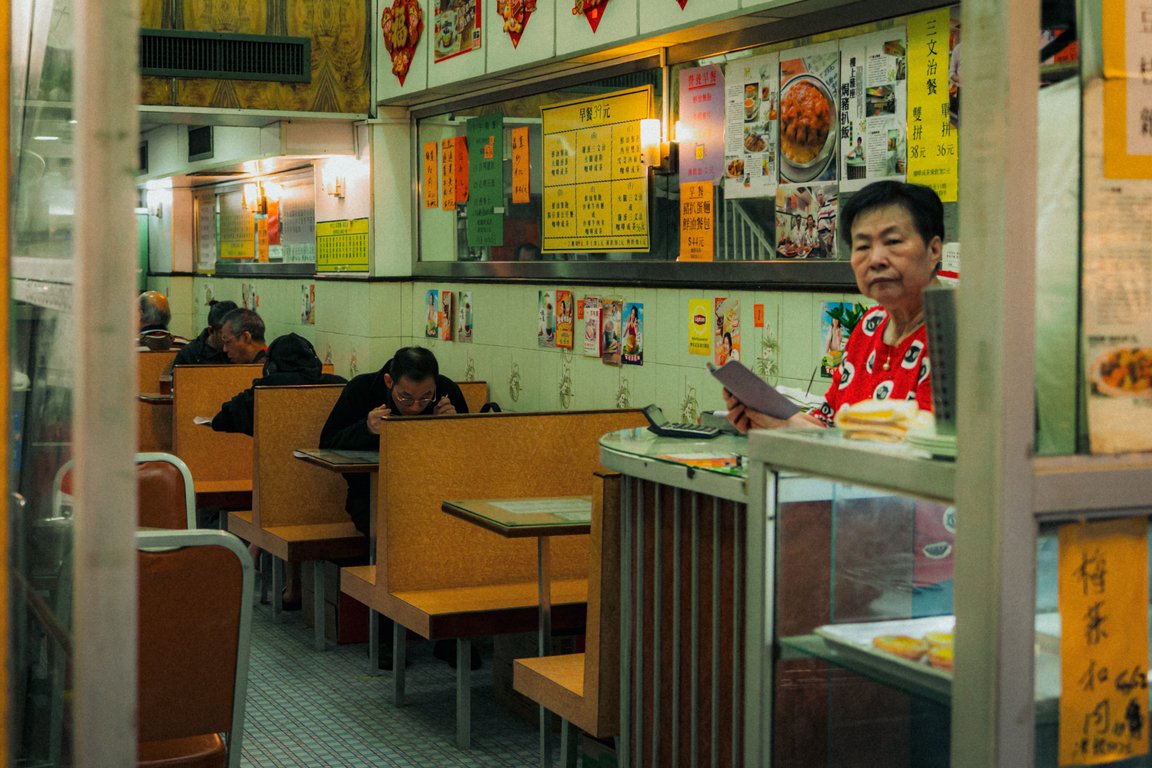
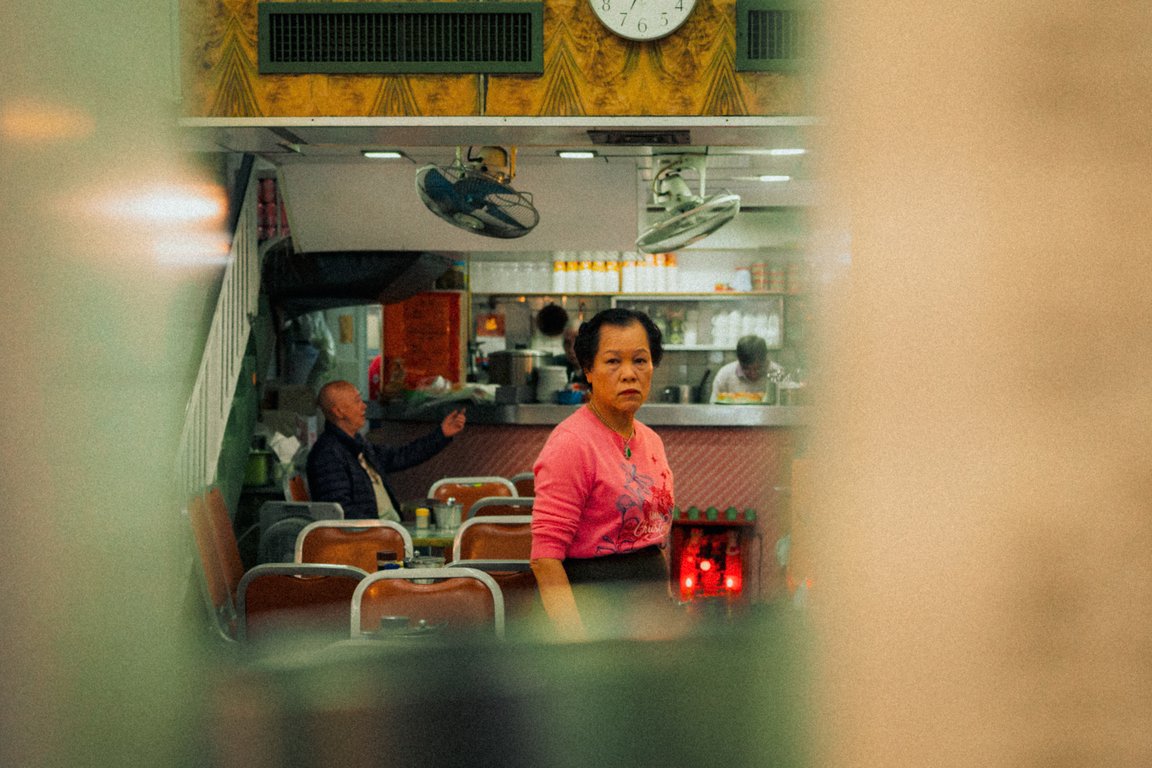
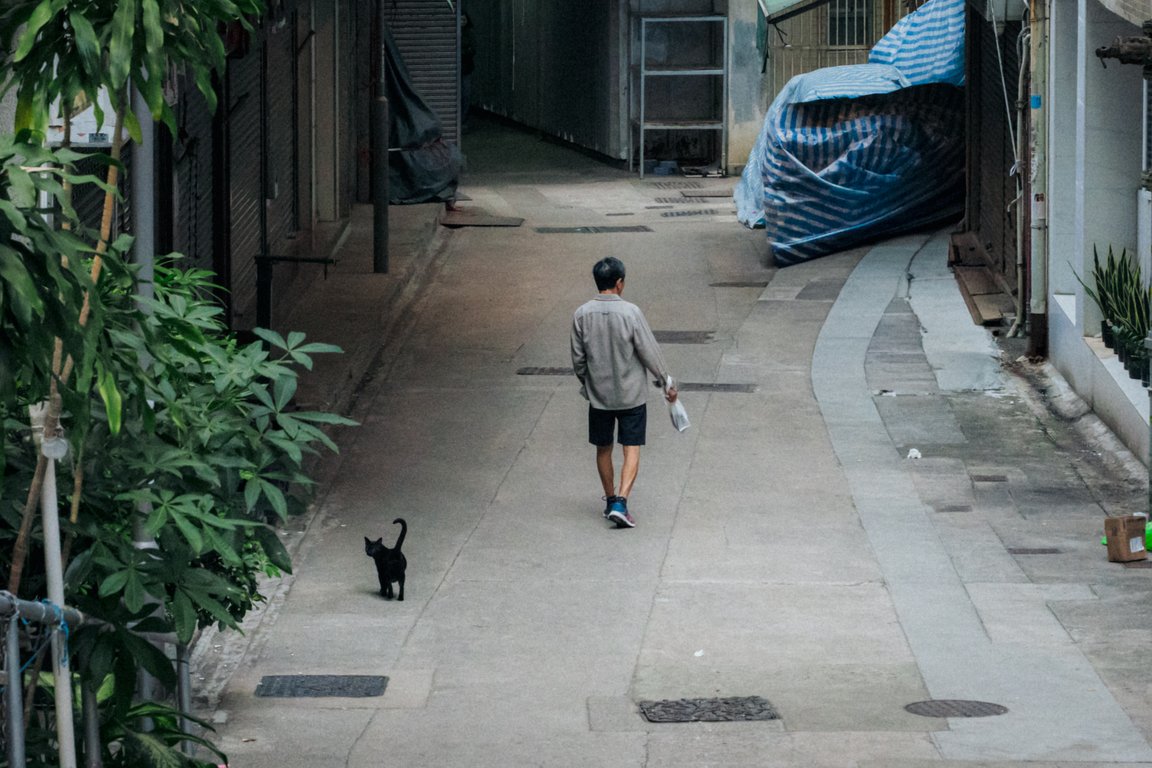
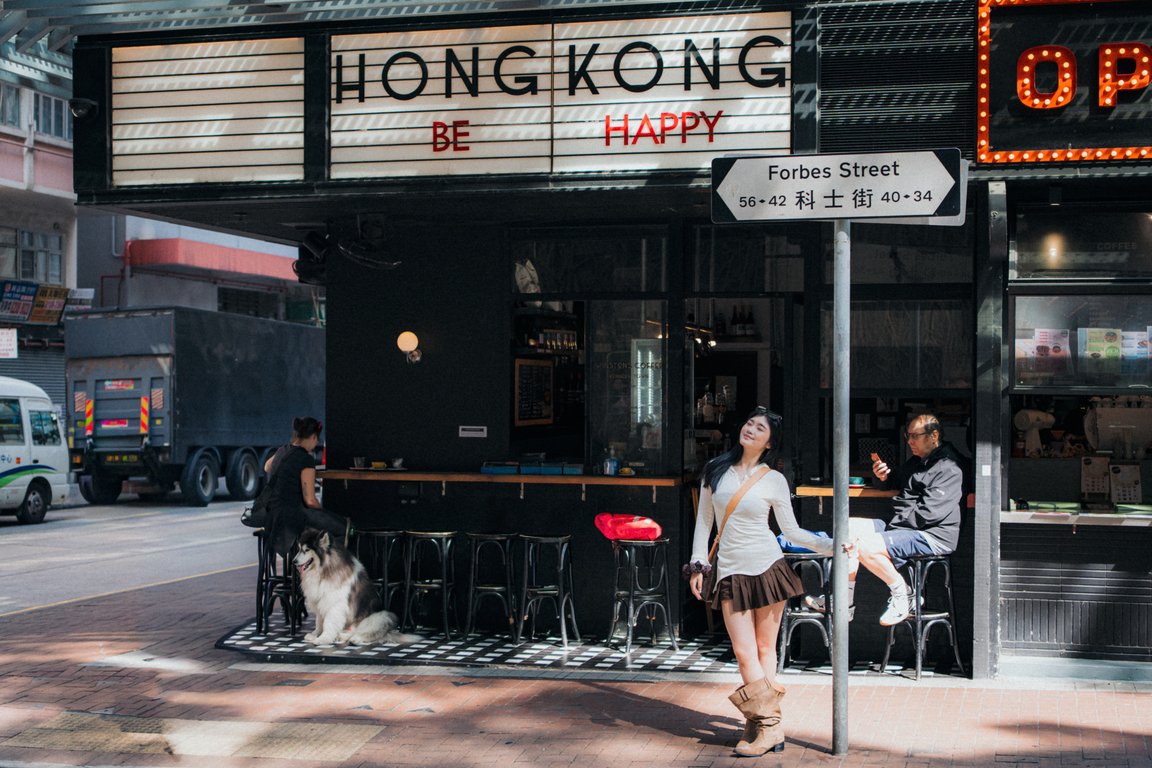
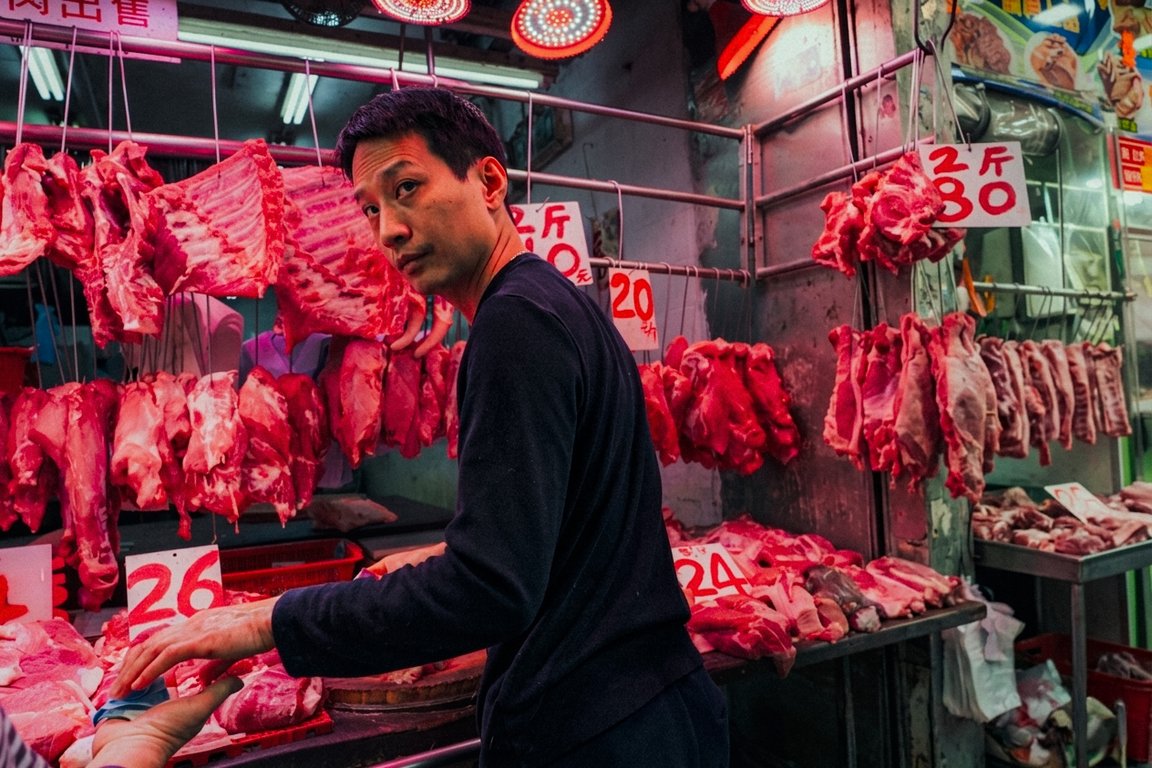
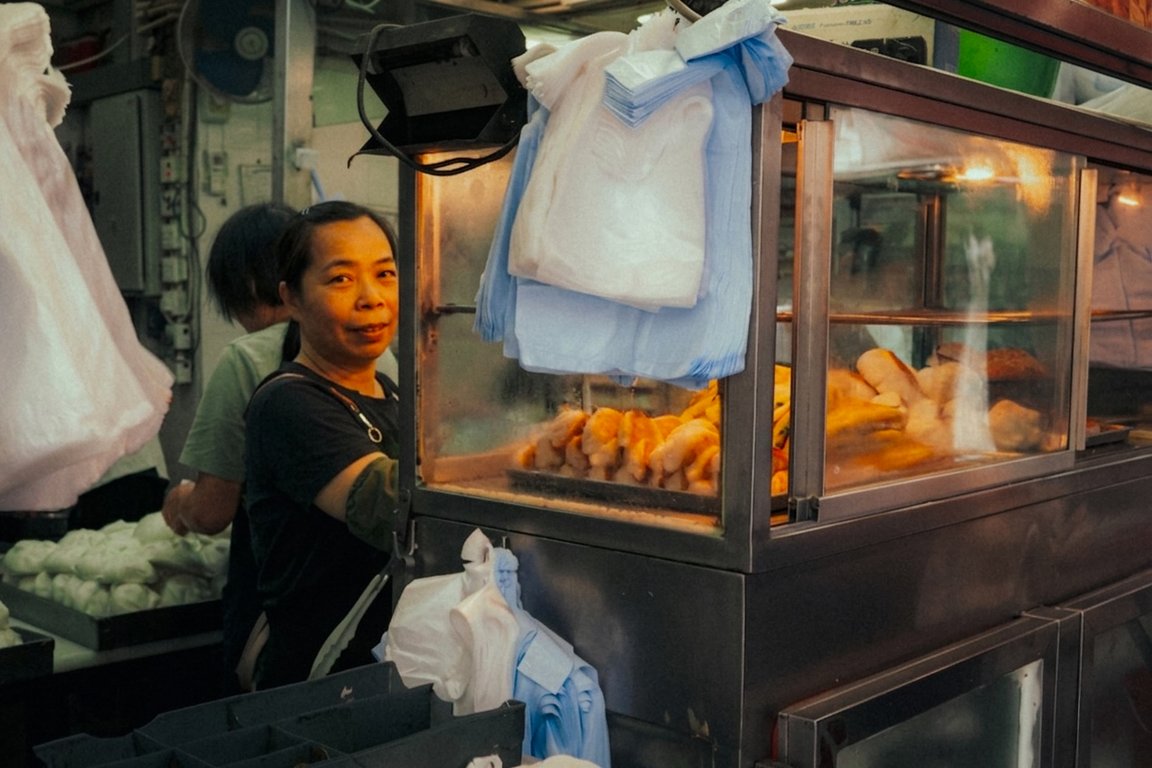
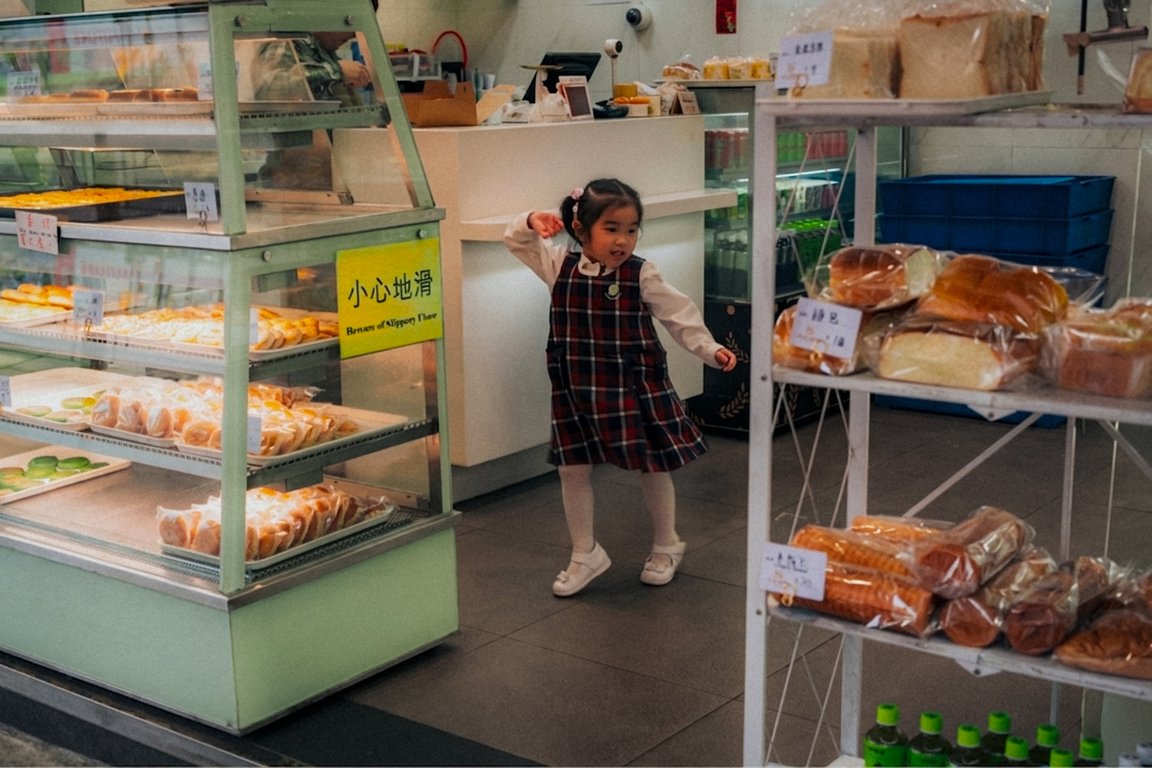
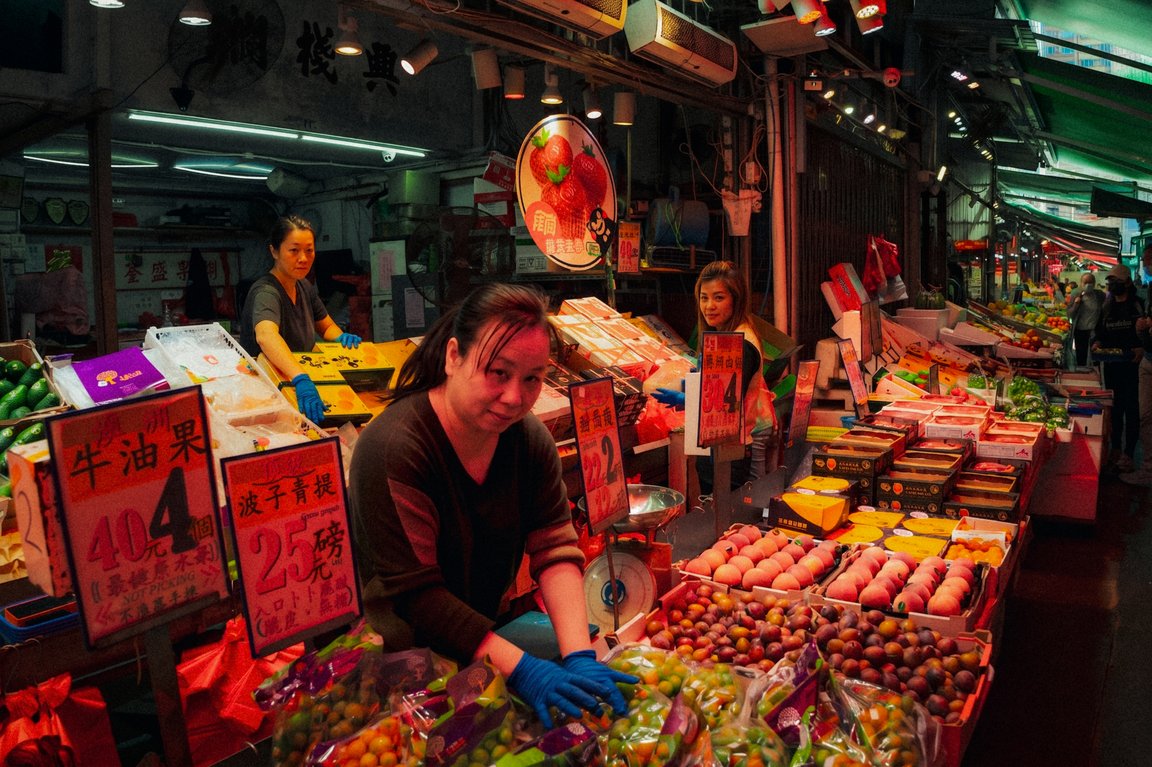
I began my second morning photographing Sheung Wan. In the morning, the area is mostly active with small retail shops opening and people moving through on their way to work. Many of the older shops are still setting out their goods, with dried seafood displayed in glass-fronted cases or hanging in open storefronts, and herbal medicine stores arranging jars, roots and packaged ingredients behind counters. Alongside these are wholesale businesses where goods are moved in and out on trolleys or by hand, often arriving early before the streets become too crowded. Newer cafés and small workspaces sit in between these older operations.
Walking closer to the pier, I saw elderly residents practising tai chi in the open air. Their movements were slow and deliberate, almost weightless. Tai chi originated as a Chinese martial art, but it is now widely practised as a gentle form of moving meditation and exercise. In Hong Kong, it is still a familiar morning ritual in parks and along waterfronts, often performed in groups.
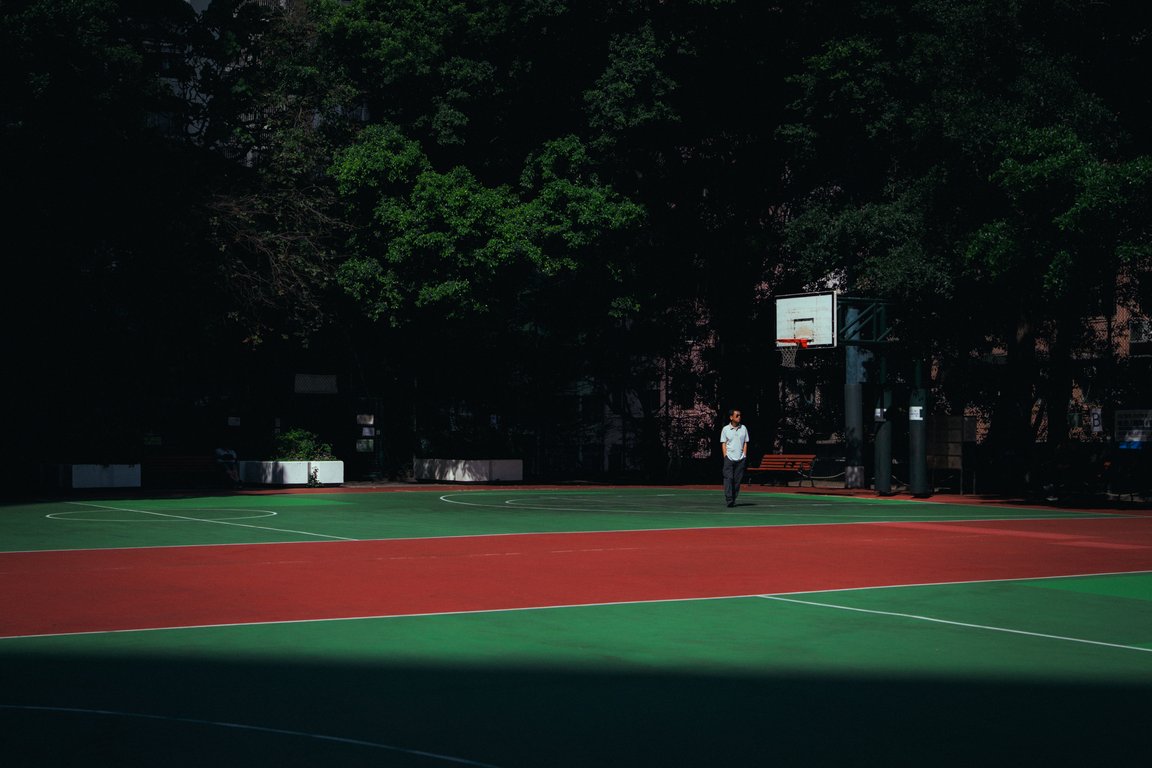
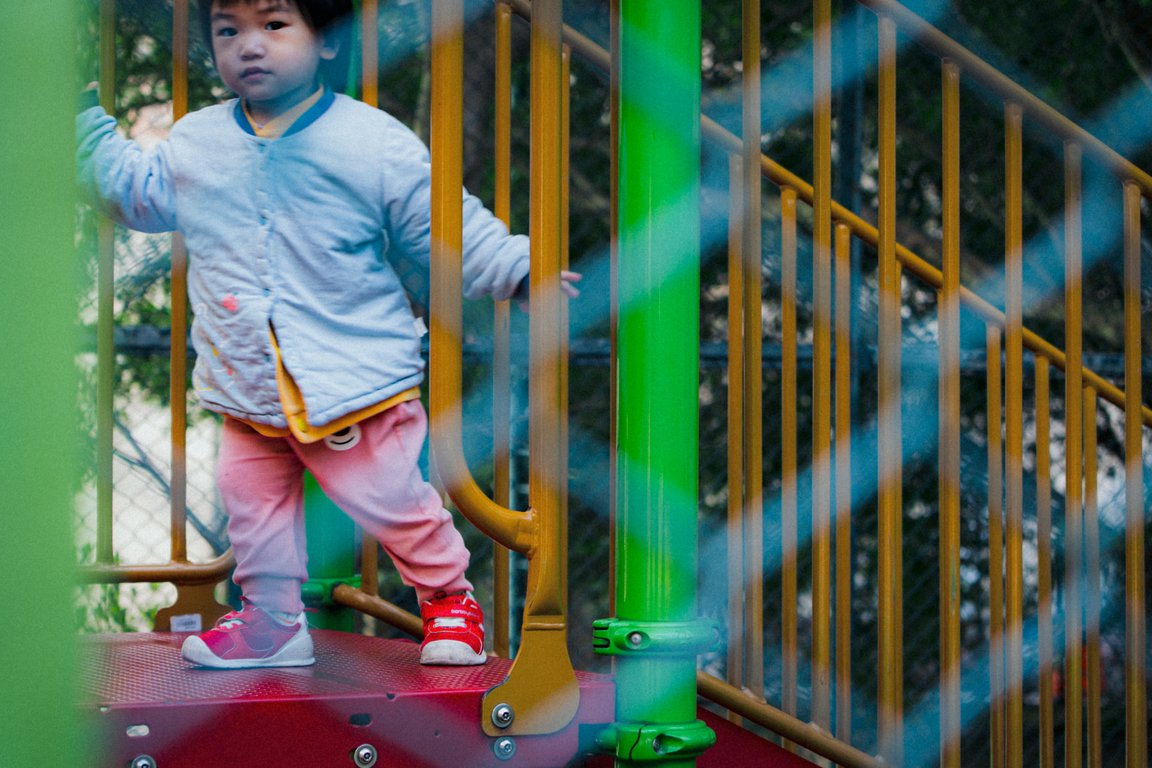
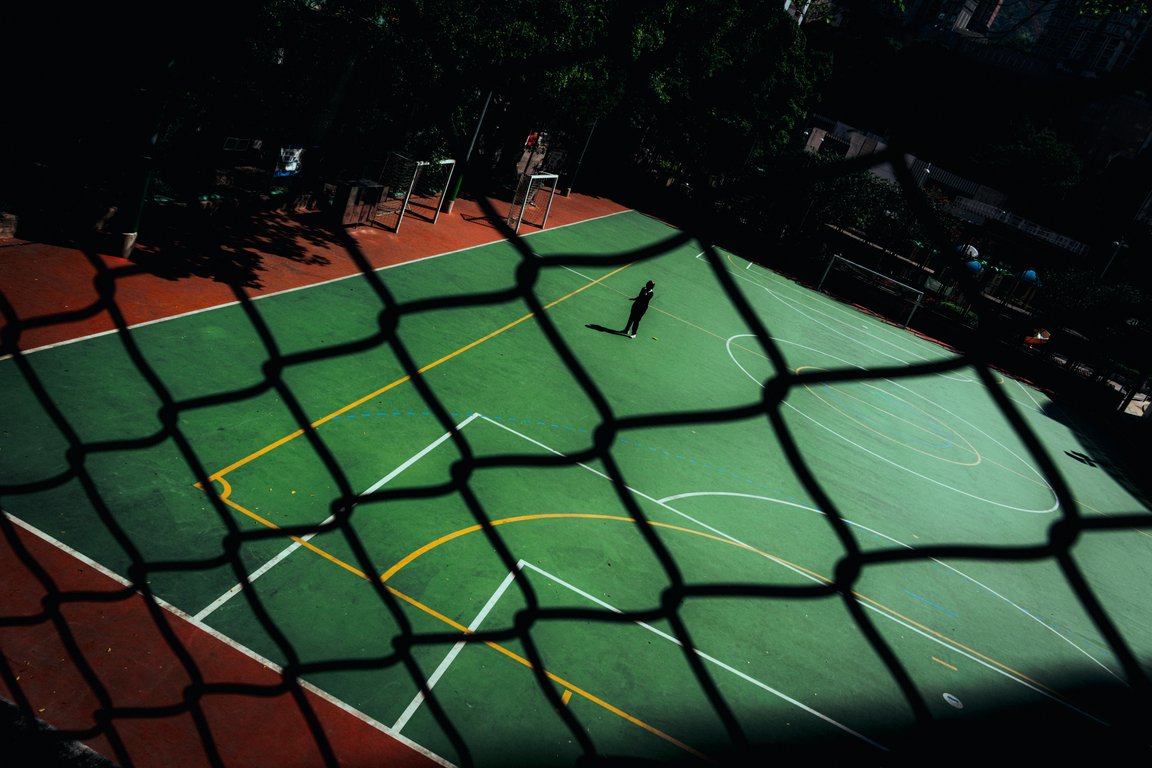
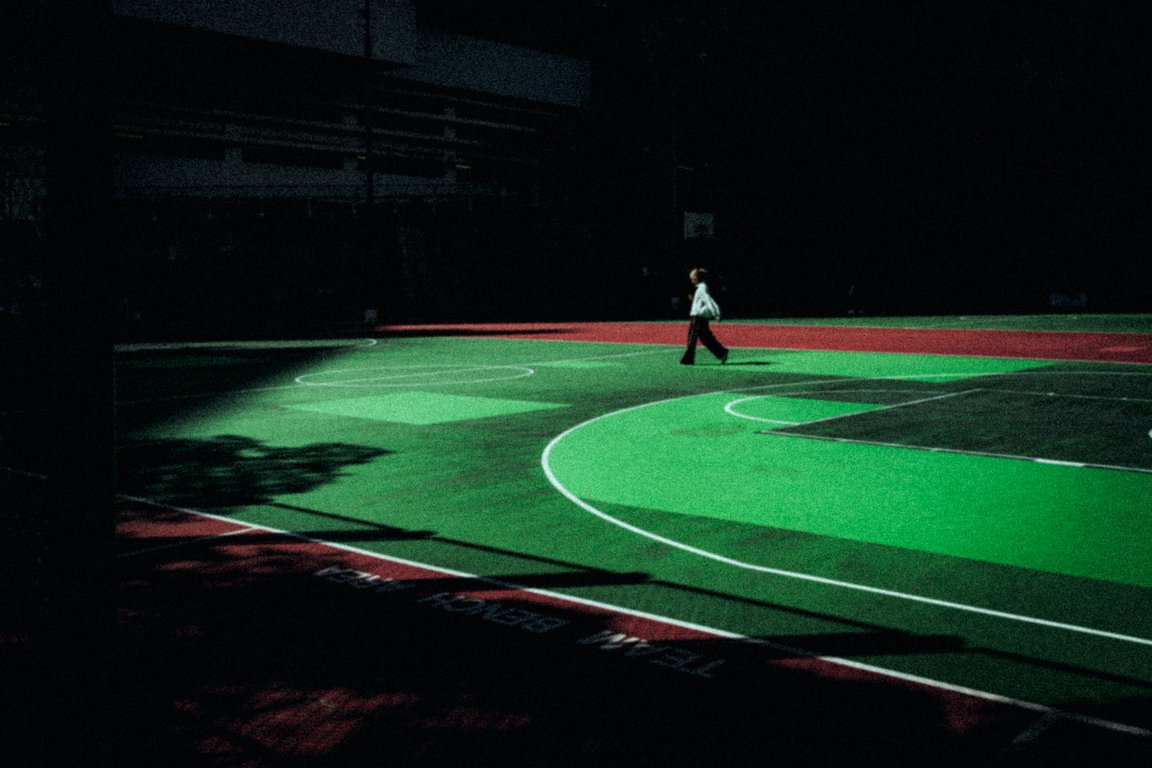
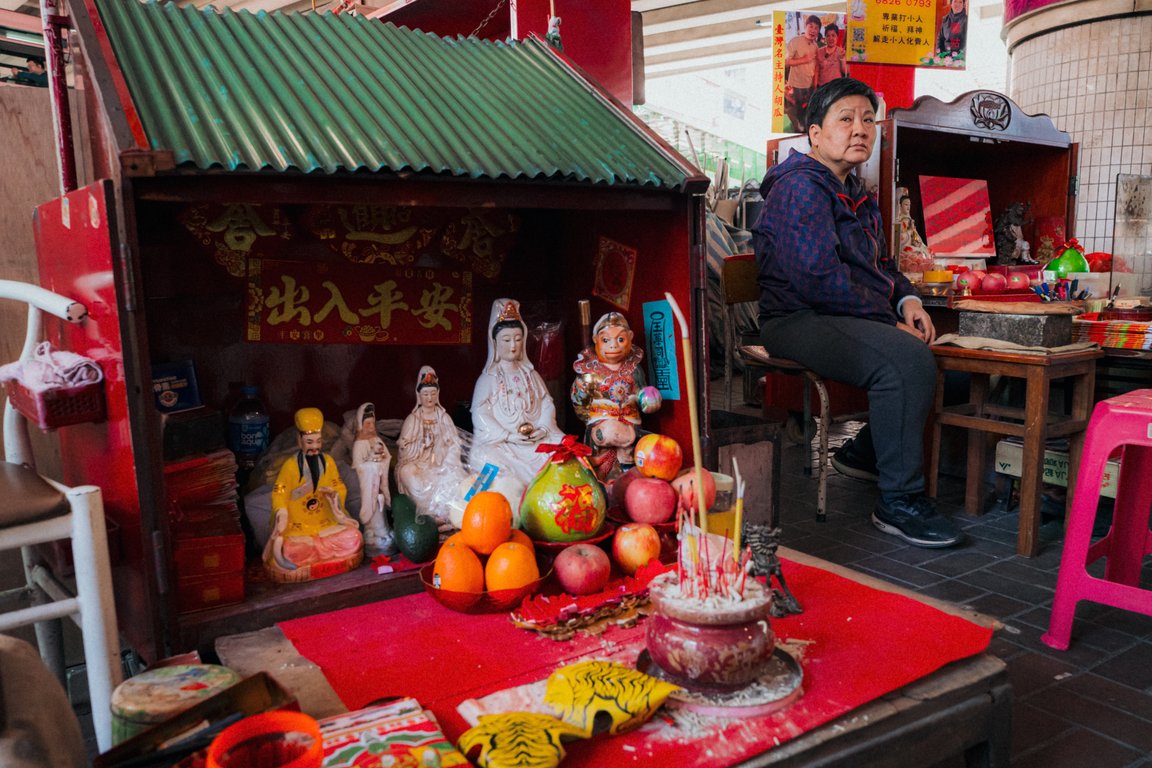
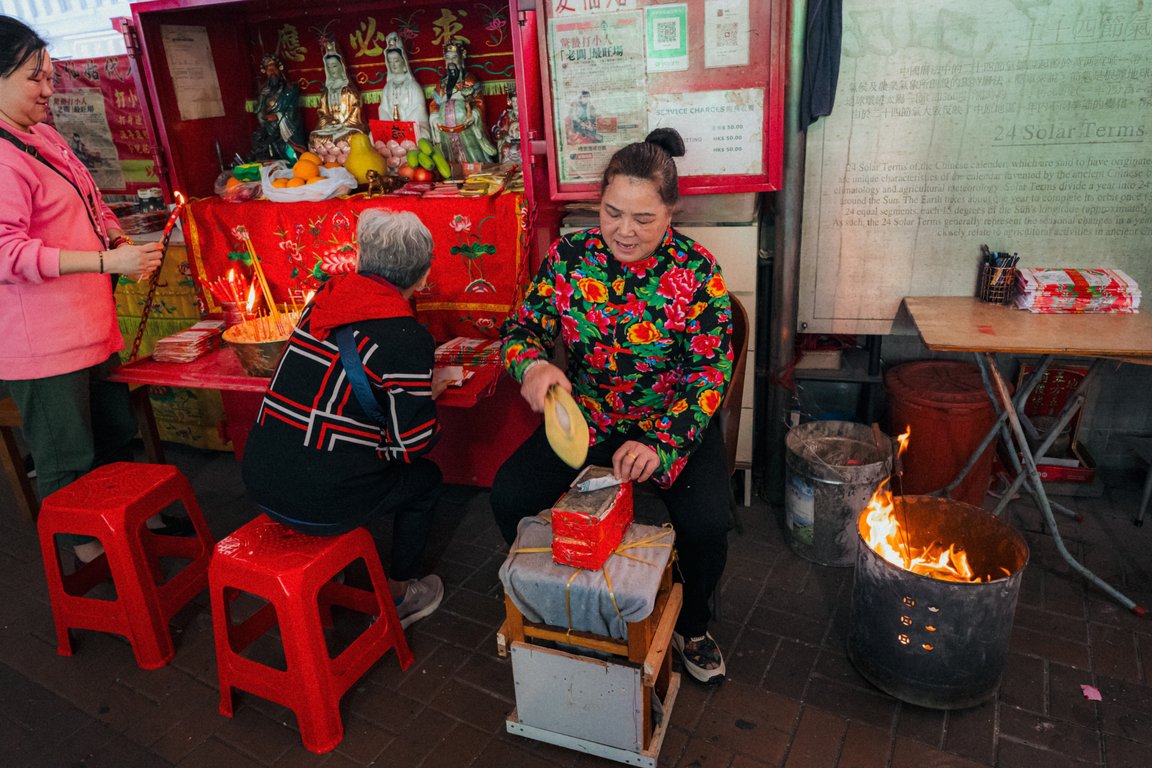
Later that day, I came across one of the stranger traditions I encountered in Hong Kong: “beating the villain.” Under the Canal Road Flyover in Causeway Bay, older women, perform a southern folk ritual for people who want to rid themselves of an enemy’s influence, bad luck or some other problem. A paper effigy representing the target is struck repeatedly with an old shoe before the ritual ends with a blessing. The use of the shoe makes the whole thing look almost comic to an outsider, even though the intention behind it is serious. The practitioners traditionally work beneath the flyover beside small shrines, incense and religious figures.
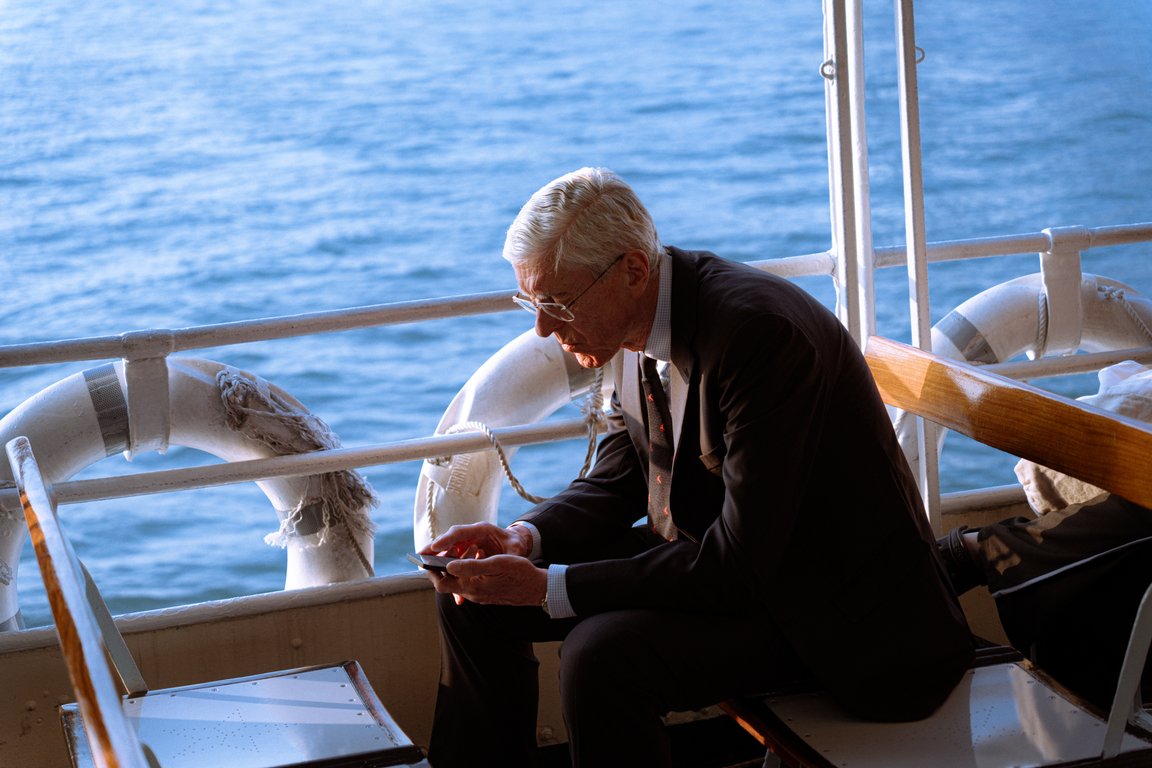
In the evening, I took the Star Ferry from Tsim Sha Tsui across Victoria Harbour and then took it straight back. There was no particular destination involved. I wanted the crossing itself: the harbour wind and a view that kept changing as the skyline moved across the deck. The ferry is so closely associated with Hong Kong that it is easy to forget how old it is. Its history goes back to 1880, when Dorabjee Naorojee Mithaiwala, a Parsee cook, started carrying passengers across Victoria Harbour in a steamboat called the Morning Star. The service eventually became the Star Ferry Company in 1898, taking its name from the boats, which all carried “Star” names.
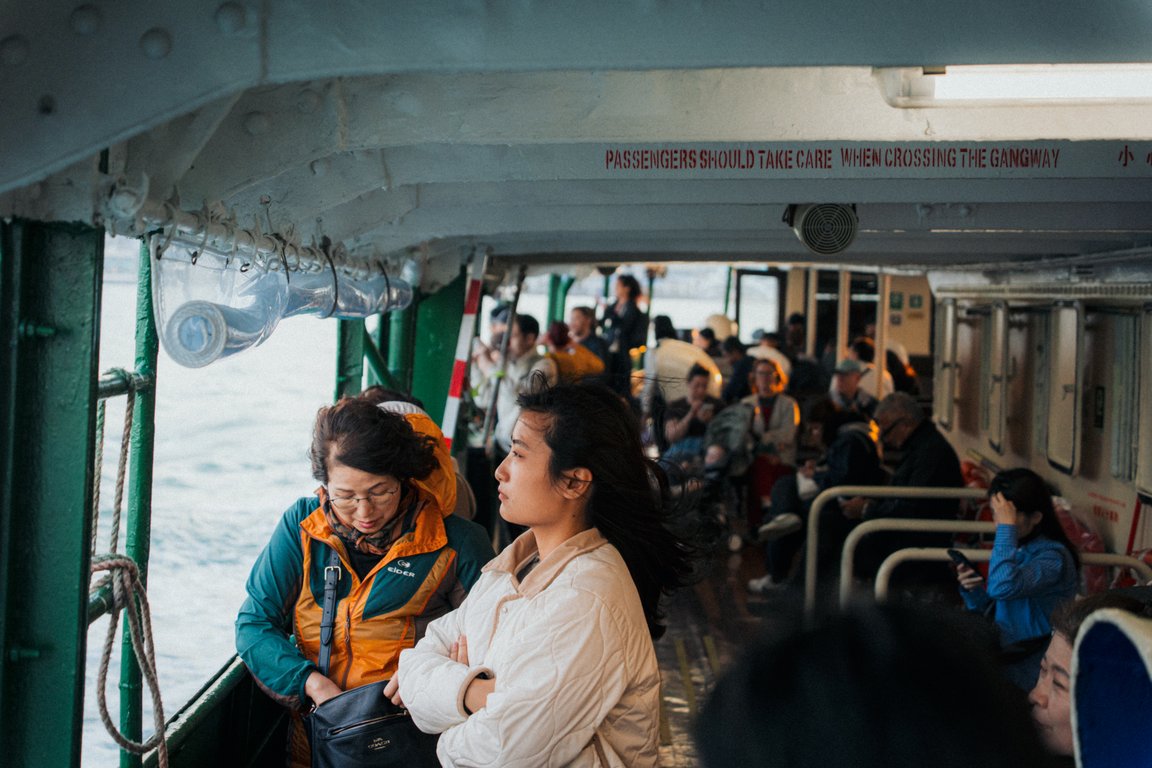
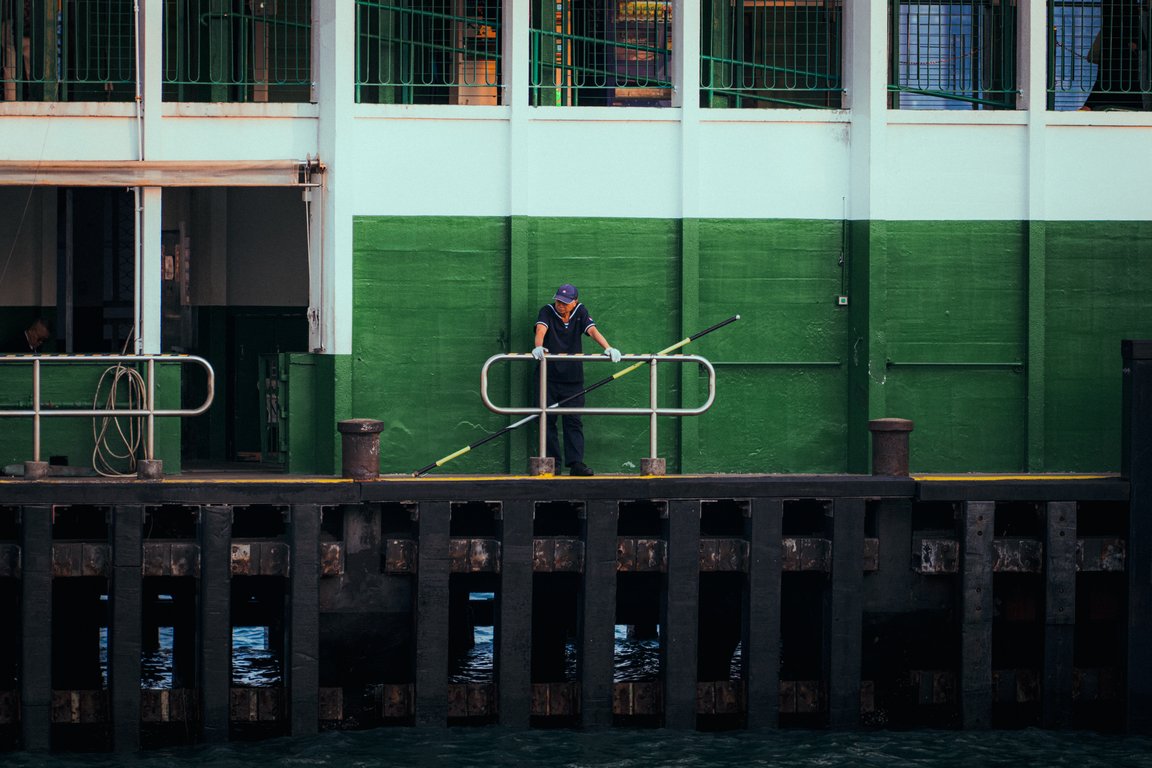
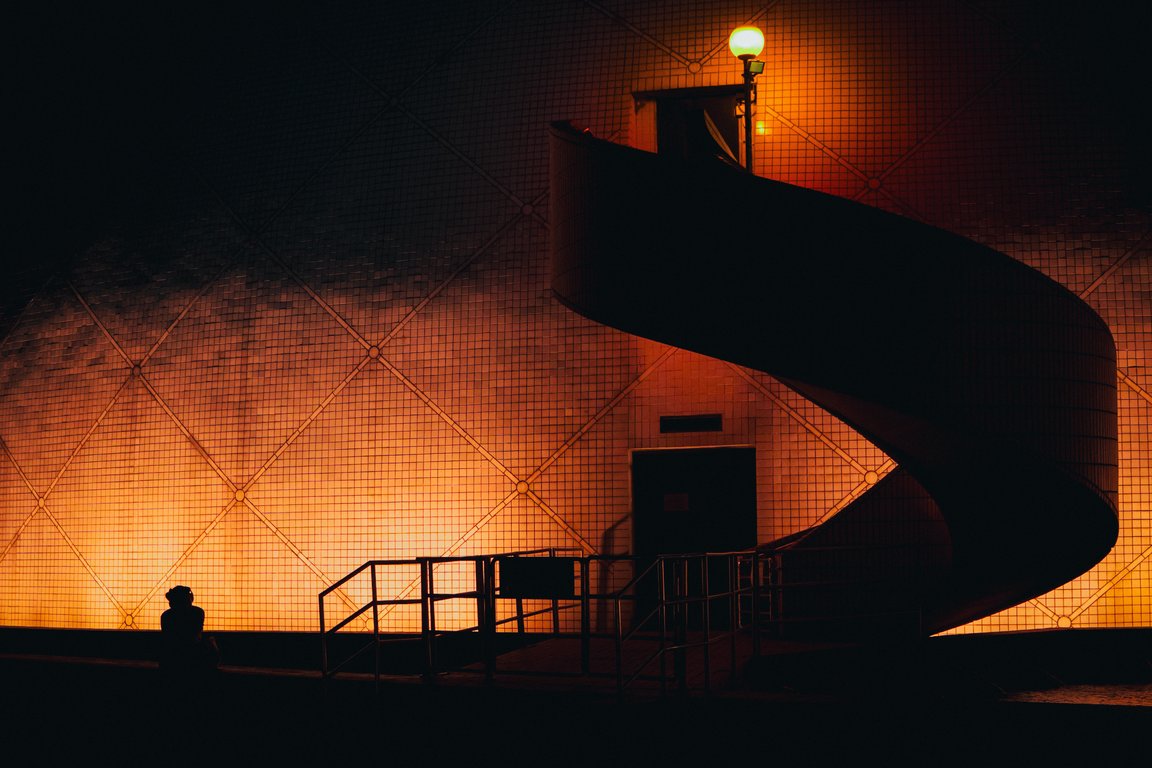
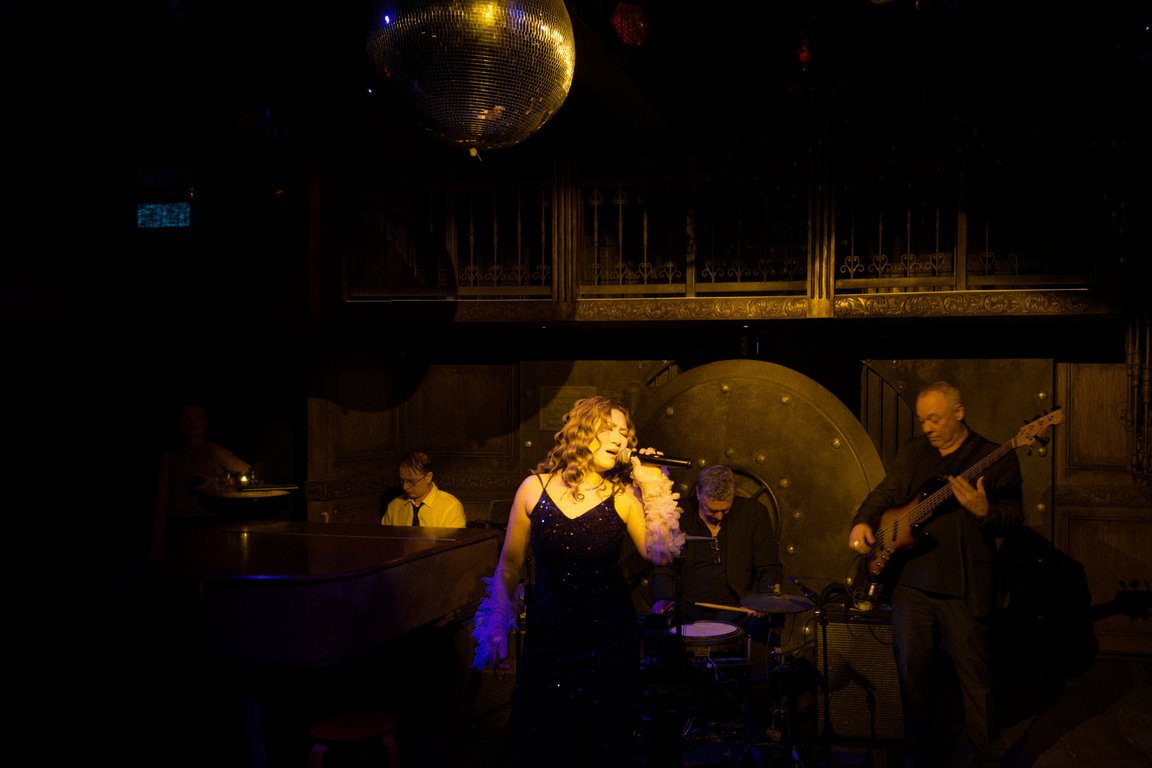
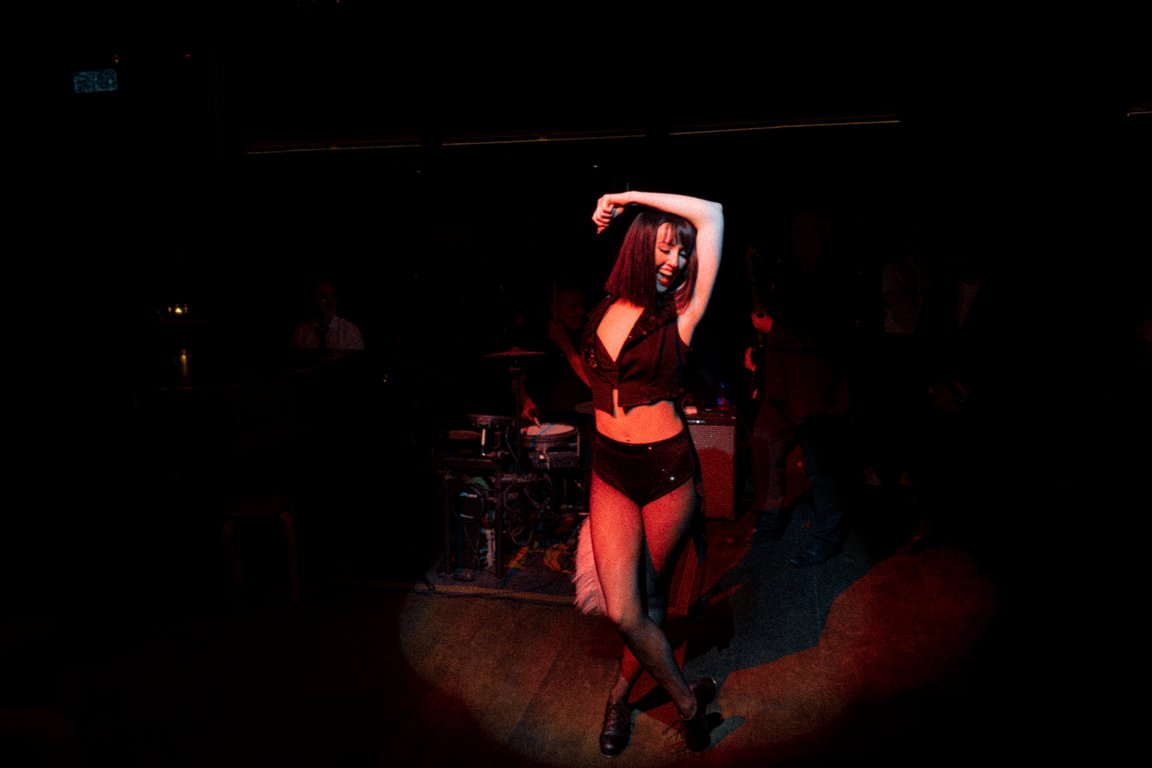
That night, I wanted to take in some live music and ended up at Maggie Choo’s Hong Kong, a jazz and cocktail bar hosting a live cabaret show. It was my first time seeing one, and I wasn’t quite sure what to expect. The room had a stylised, old-world feel, with dim lighting and a speakeasy atmosphere. I enjoyed the performance more than I expected. It felt intimate and unpolished. I learned that cabaret blends nightclub entertainment, theatre, burlesque, and live music. It was one of the most memorable experiences I had during the trip.
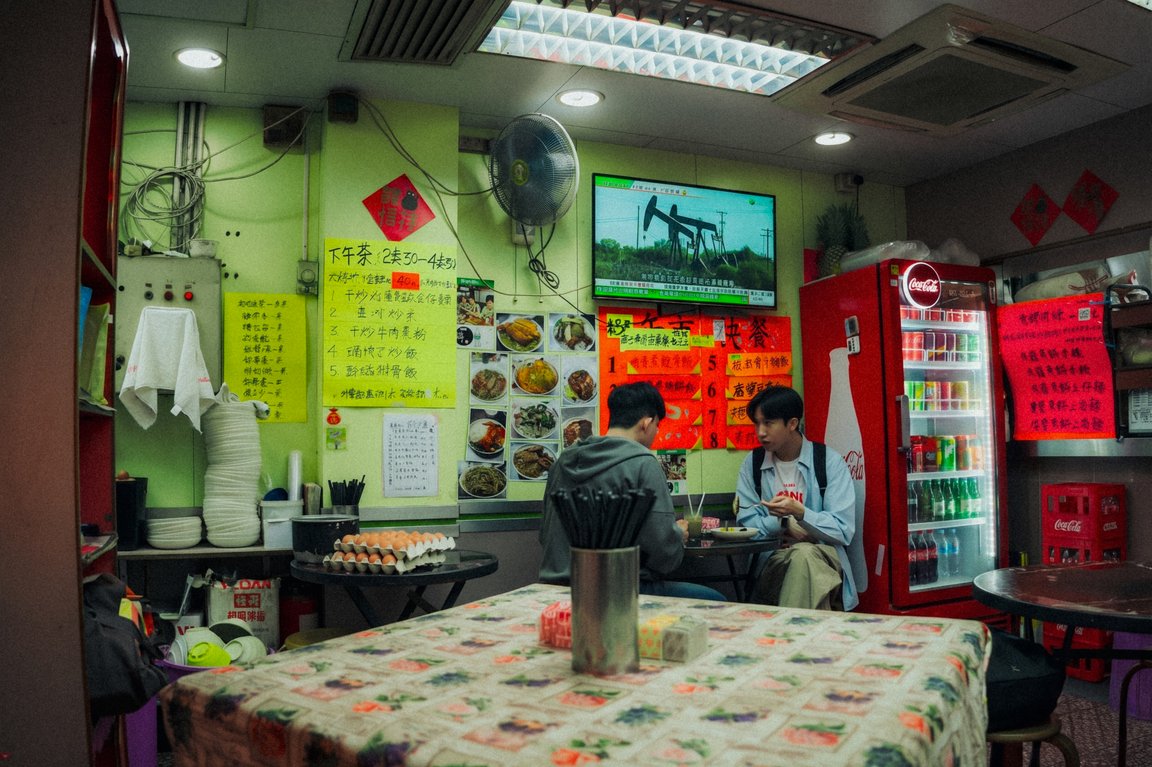
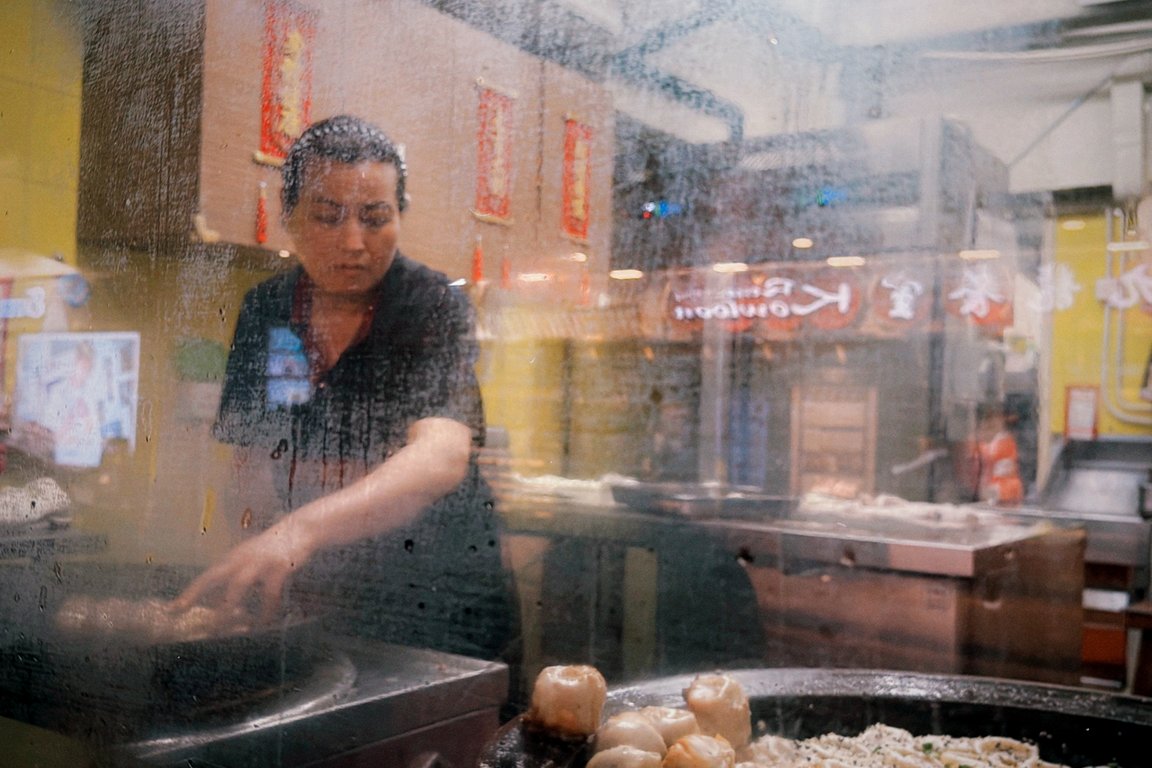
As for many people, travel is also appealing to me because of the food experiences it offers, and throughout the day I kept stopping for food between walks, trying some of the classic fare Hong Kong has to offer. While I don’t find food photography particularly appealing, I want to highlight a few of the best things I had, in case you find it useful if you ever go there.
• Cheung fun at Hop Yick Tai. The rice-noodle rolls are soft and silky, served with a lightly sweet sauce.
• Cold Hong Kong milk tea at Sun Heung Yuen. It is strong and silky, with enough tea flavour to come through the milk and sugar.
• Pineapple bun with cold butter on Portland Street. The bun is warm with a crisp, sugary crust and a thick slab of cold butter inside. The mix of sweet and salty, hot and cold, is excellent.
• Black sesame sweet soup at Kai Kai Dessert. It is thick, dark and nutty, with a slight bitterness that balances the sweetness.
• Egg tart. The pastry is flaky and crisp, with a soft, smooth custard centre.
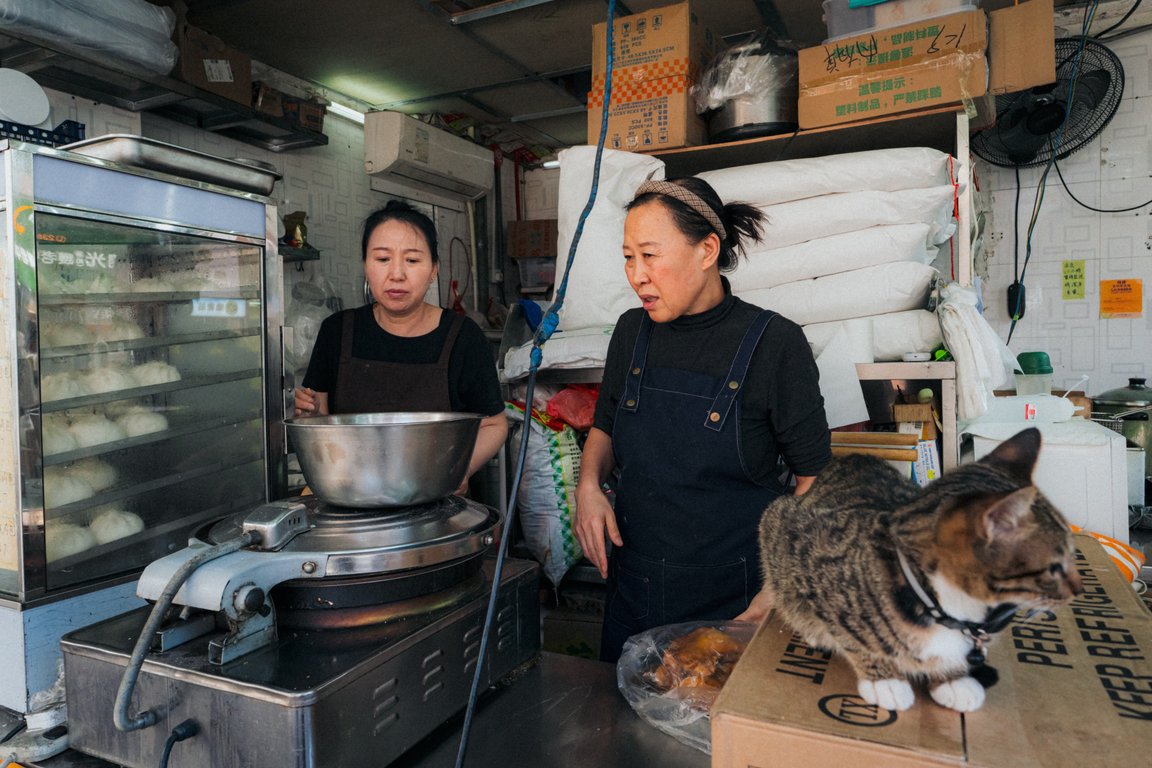
• Pan-fried pork buns at Cheung Hing Kee. The buns are crisp and brown underneath, soft on top and filled with hot, juicy pork.
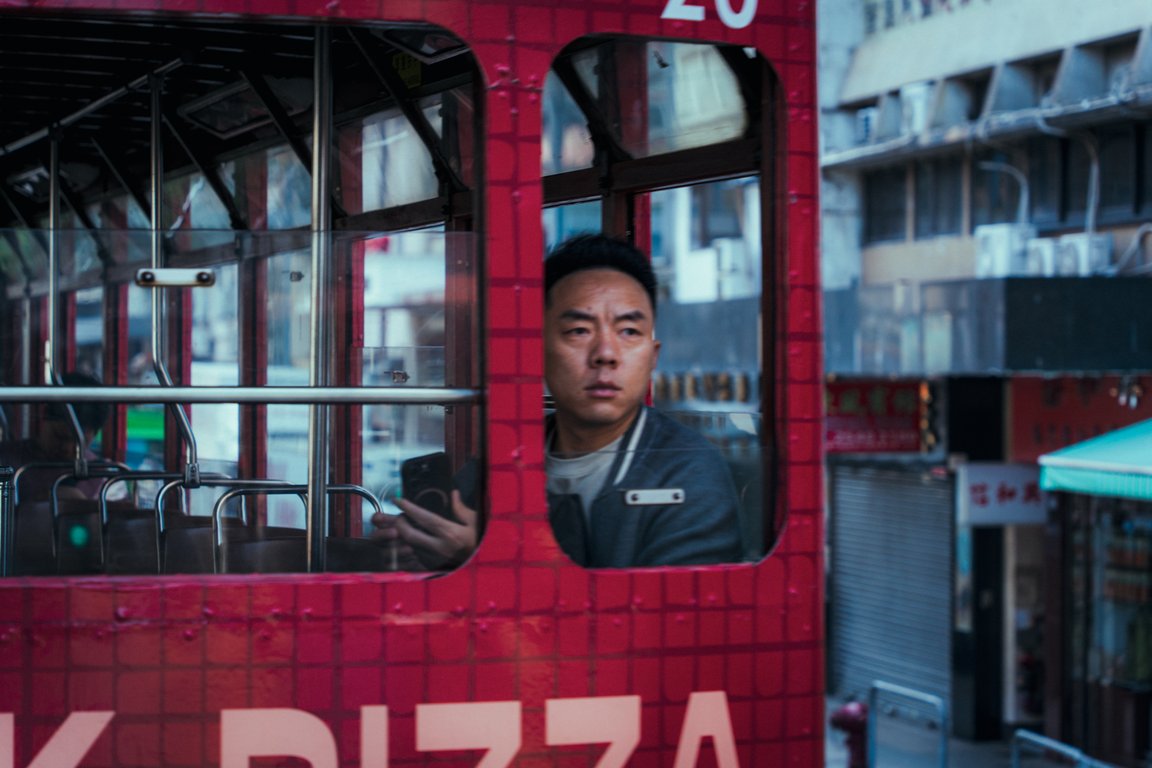
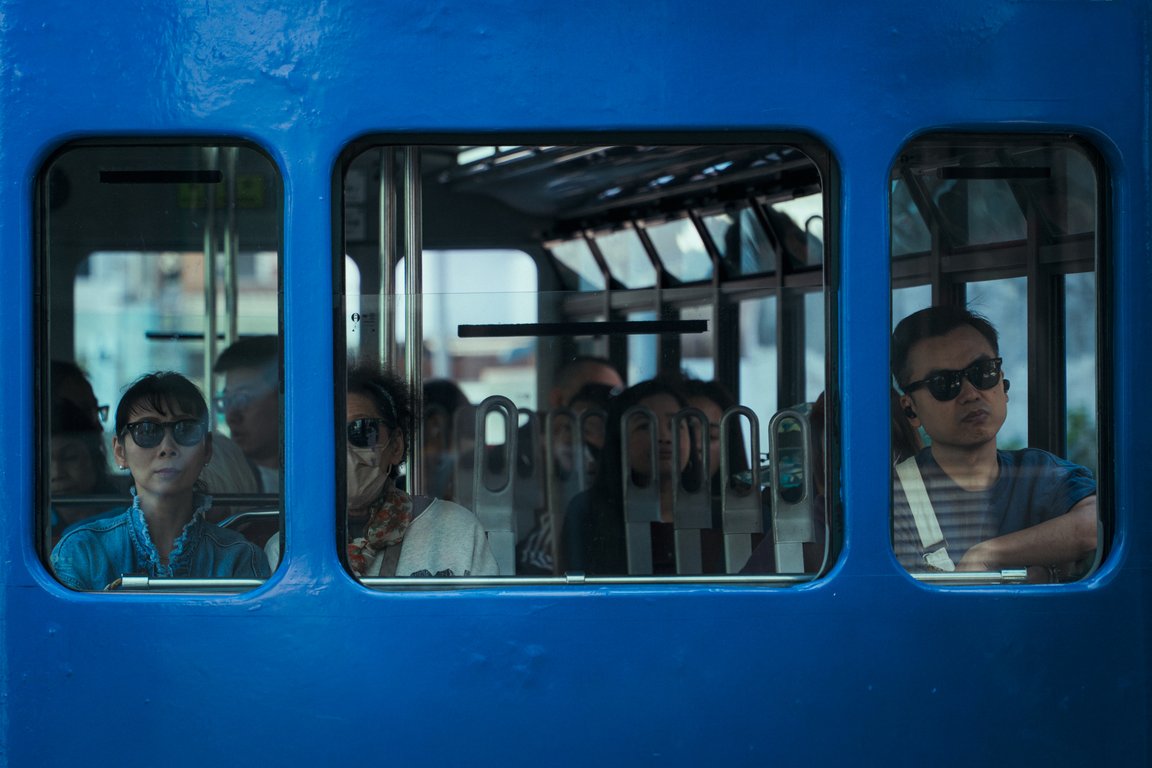
On my last day, I rode the Ding Ding tram across the north side of Hong Kong Island, sitting on the upper deck as the city moved past below. Shopfronts, apartment windows, old signs, office towers and crowded crossings followed one after another, all seen from just above street level. The trams have been part of Hong Kong for well over a century and still run along some of the island’s busiest streets. They began as single-deck cars before evolving into the narrow double-deck trams now associated with the city. Their nickname, “Ding Ding”, comes from the bell drivers use to warn pedestrians and other traffic.
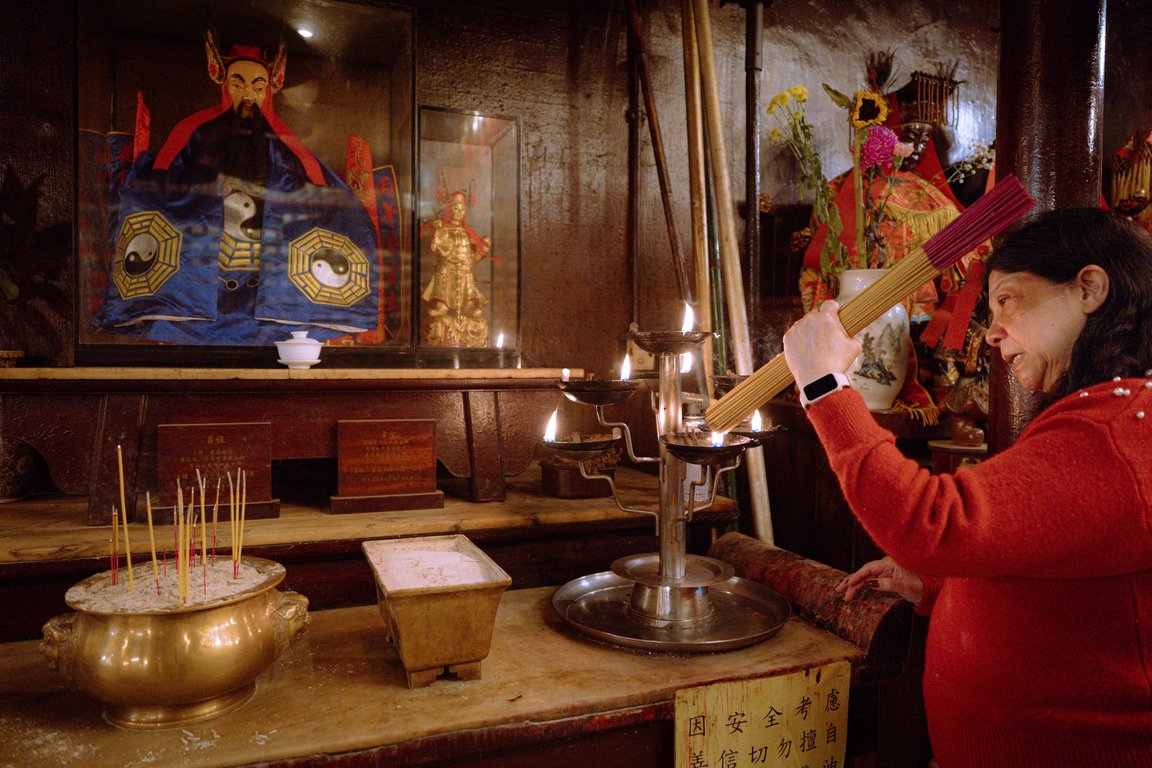
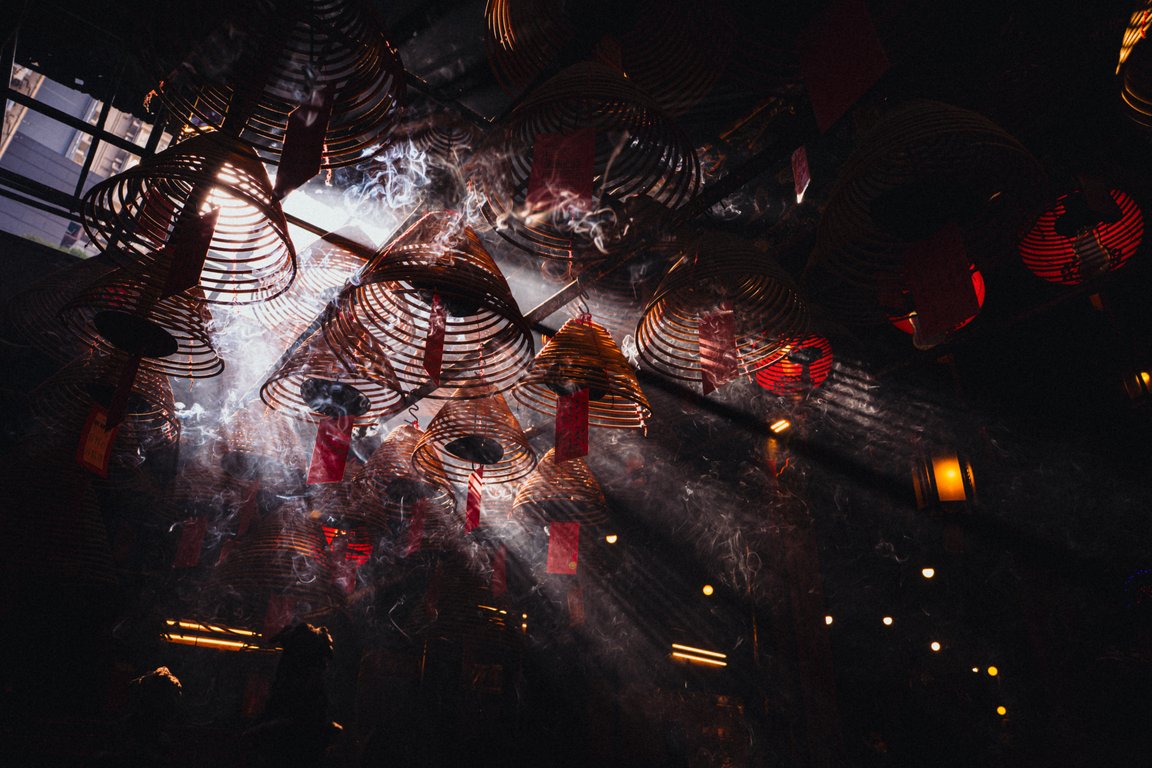
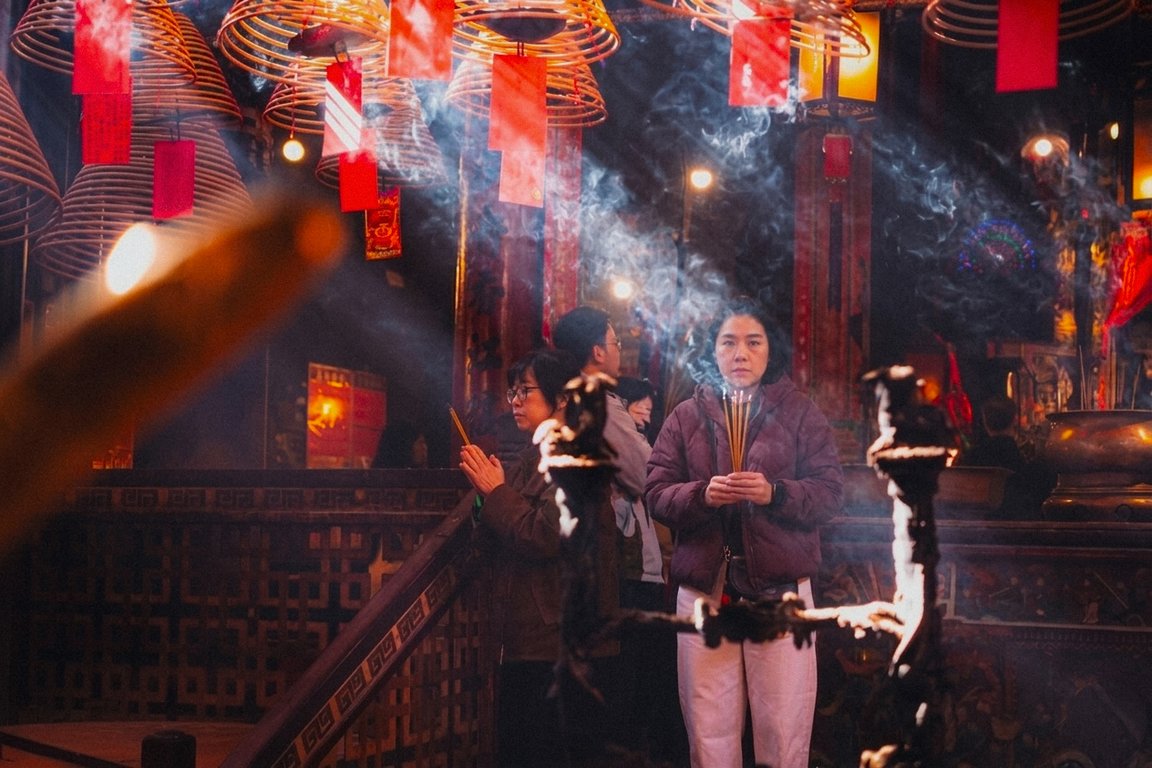
Later, I walked into a temple where several rituals were happening at once. Large coils of incense hung from the ceiling, while worshippers lit joss sticks, prayed before the deities and left offerings at the altars. Elsewhere, joss paper was being burned. In traditional Chinese worship, these are different ways of making offerings or communicating with gods and ancestors. Joss paper, for example, is burned so that what it represents can symbolically pass into the spirit world. I also watched people practise kau cim, a form of divination common in Chinese temples. A worshipper shakes a bamboo cylinder filled with numbered sticks until one falls out. The number corresponds to a written fortune, which can then be interpreted in relation to a question or problem. Another form of divination uses crescent-shaped wooden blocks called jiaobei. A person asks the deity a question and throws the two blocks onto the floor. The way they land is read as a response, often to confirm whether an interpretation or decision is correct.
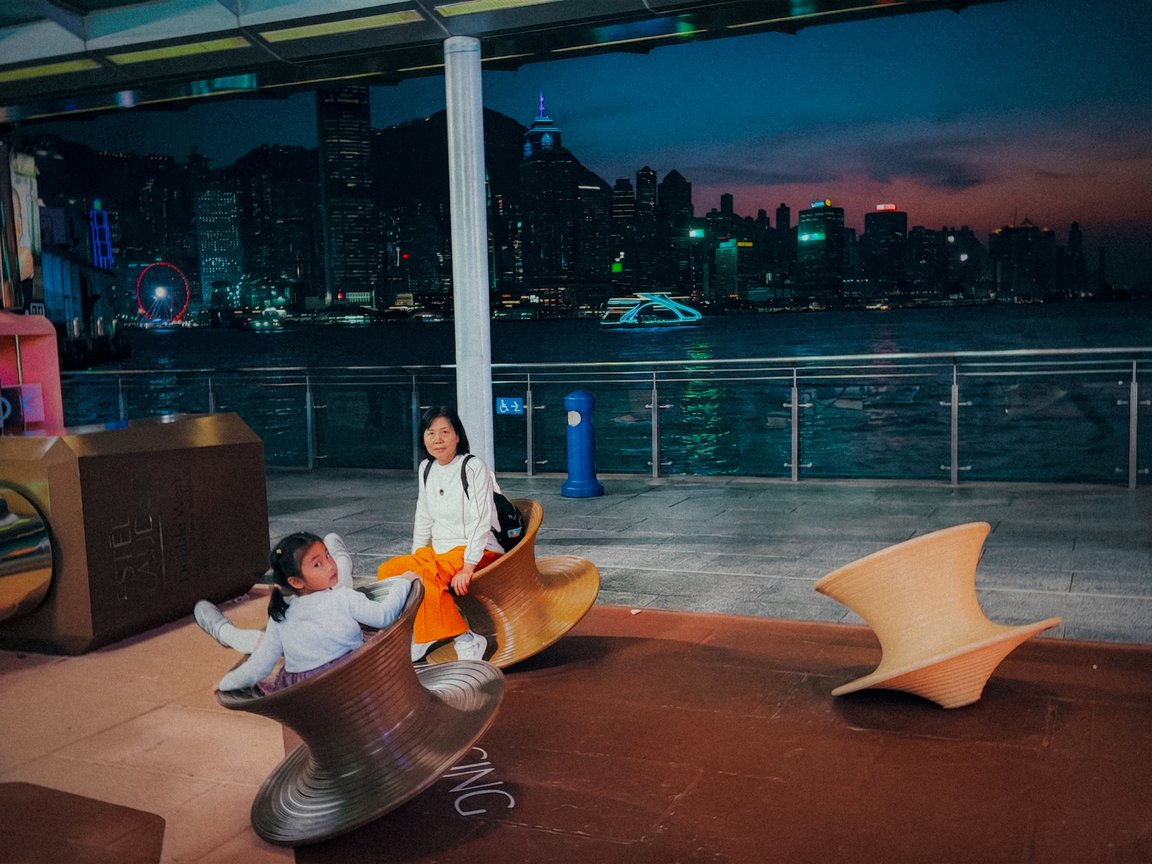
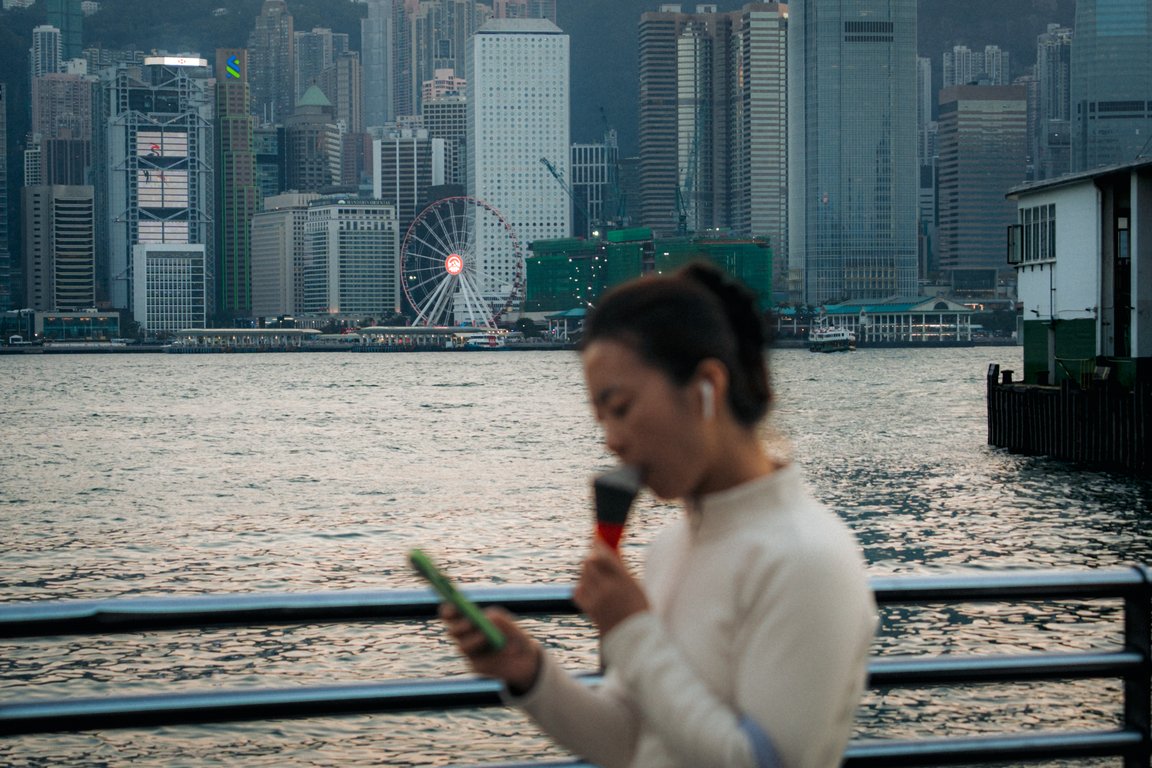
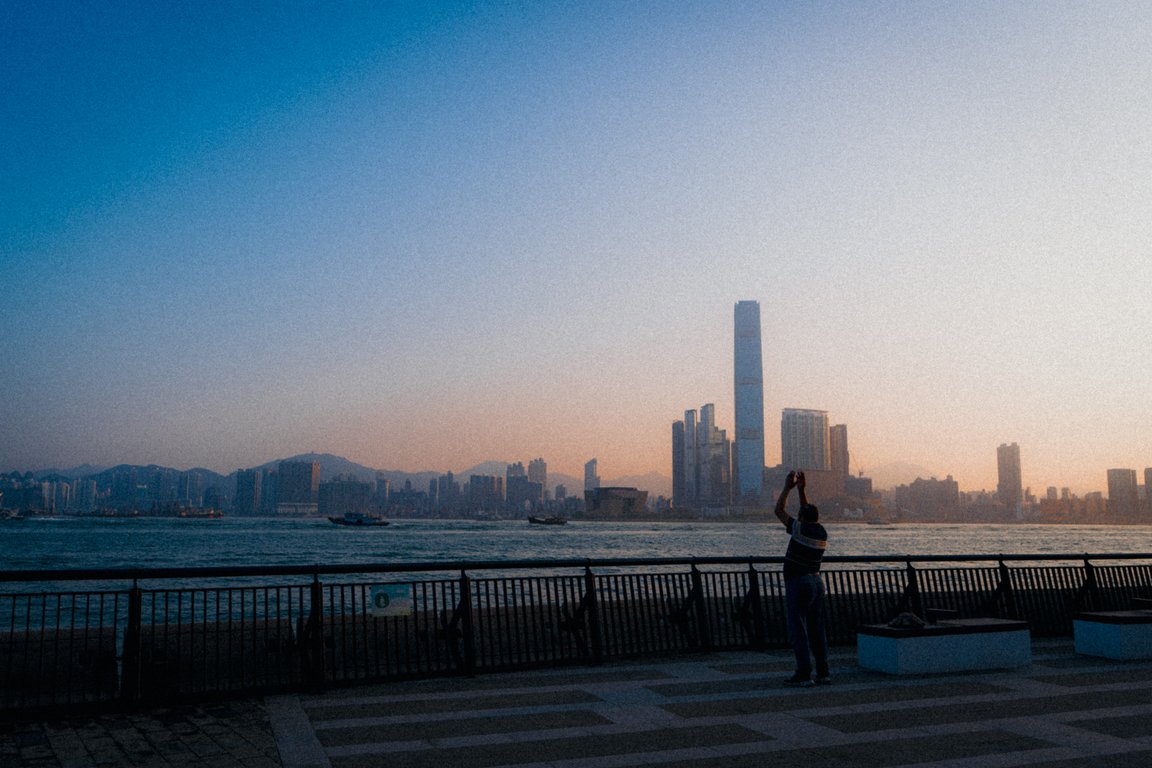
Around sunset, I crossed to the Tsim Sha Tsui Promenade and walked along Victoria Harbour. The sky turned orange as ferries moved between Kowloon and Hong Kong Island and the buildings opposite began to light up. As daylight faded, their reflections became clearer on the water. From the promenade, I could see working boats, the skyline, the hills behind Hong Kong Island and a long stretch of open harbour. It was one of the few places where Hong Kong felt horizontal. The harbour helps explain why the city developed the way it did. Hong Kong grew around a naturally sheltered port, with dense urban districts forming on both sides of the water. Even today, the harbour is not just scenery. Ferries, cargo vessels and smaller working boats continue to move through it, so the view combines the city’s skyline with the older maritime life that helped create it in the first place.
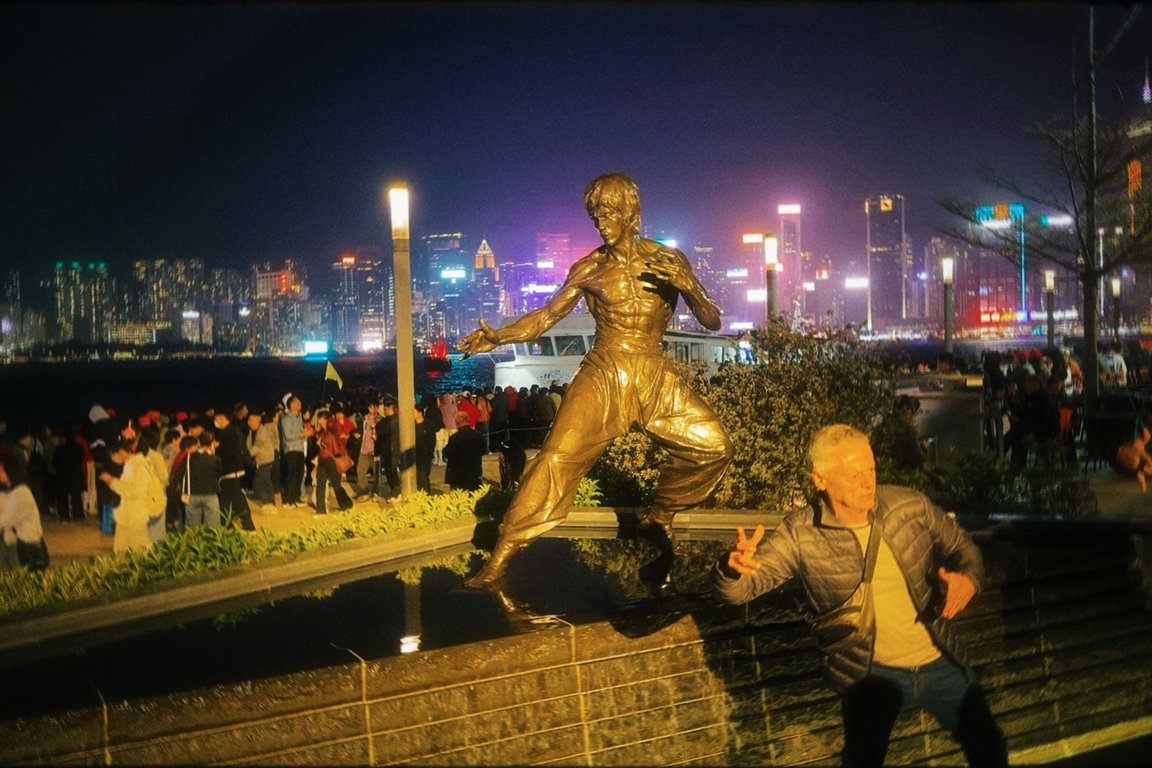
Late that night, I returned to Mong Kok and walked around as the neighbourhood was winding down. Shutters were coming down, workers were finishing their last tasks and the crowds had thinned. What remained were the illuminated signs, shopfronts and patches of neon breaking up the darker streets. They made the area especially good for photography, with coloured light falling across buildings, pavements and the occasional person still passing through. Neon became one of the most recognisable features of Hong Kong’s streets because businesses competed for attention in neighbourhoods where shops were packed tightly together and street frontage was limited. Signs were stacked above one another and projected out over the road, turning the vertical space above the pavement into advertising. Many traditional neon signs have since disappeared or been replaced by newer lighting, which makes the surviving ones feel increasingly connected to an older version of the city. I also passed several mahjong parlours. They looked surprisingly grand from the outside, but their doors were closed and signs made clear that they belonged to a regulated world. Mahjong occupies an unusual place in Hong Kong culture. It is an ordinary social game played with family and friends, but it can also involve gambling, which is why commercial mahjong parlours operate under licences and restrictions. From the street, very little of that world was visible. Mong Kok felt different at that hour. Without the daytime crowds, there was more space between people and more visual quiet, interrupted by the remaining signs and pools of artificial light. The combination of empty streets, neon and closed shopfronts made it a particularly good place to photograph at night.
On my last night, I thought back to the beginning of the trip: the flight, the immigration desk, and the uncertainty about whether I would be allowed in. It was a strange way to arrive, but after a few days in the city it had already started to feel distant. I had spent most of the trip walking, taking photographs and trying to understand different parts of Hong Kong as I came across them. A few days had given me enough time to see many different versions of Hong Kong, even if only briefly.